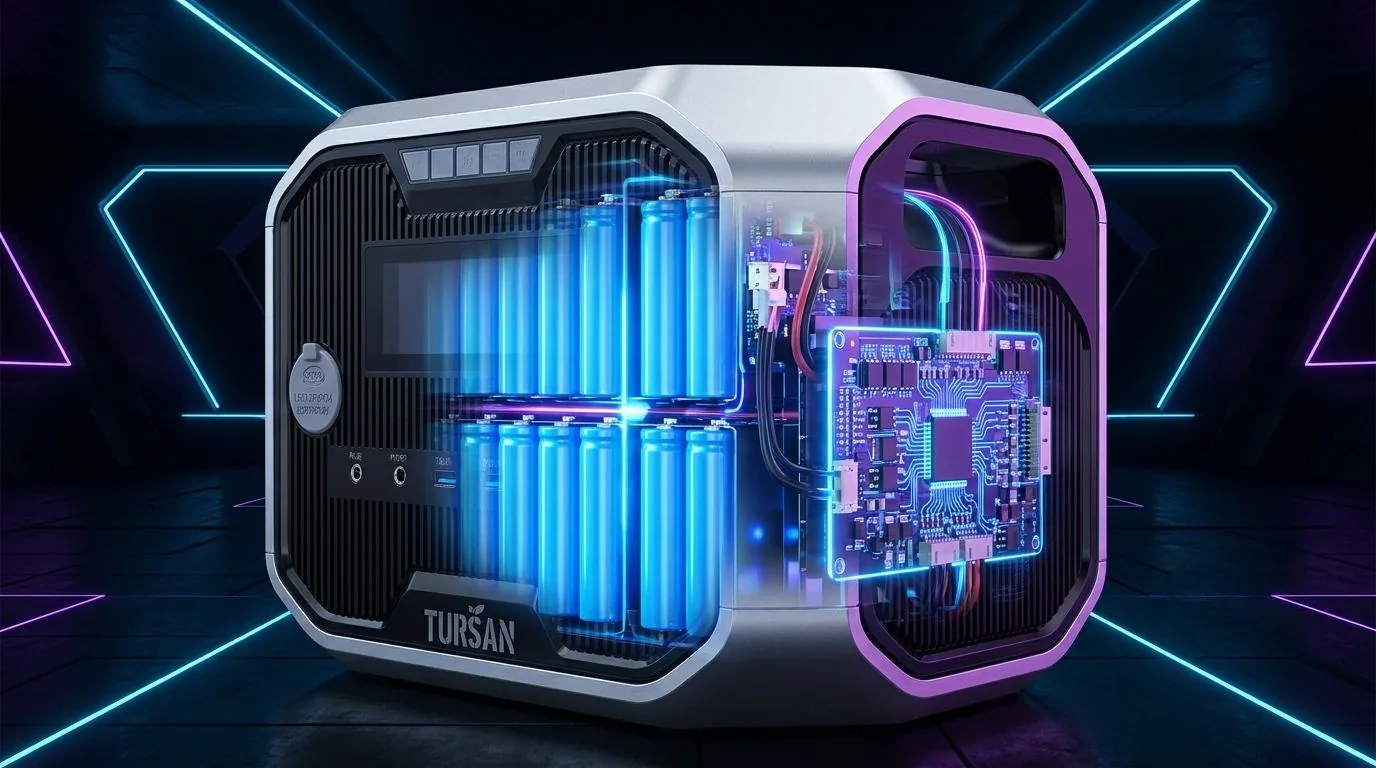
It is the question we get more than any other, usually on WhatsApp, usually at the end of a long conversation about something else entirely: can this thing run my AC?
The honest answer is yes — but only with the right unit, and only once you understand why an air conditioner is harder on a battery than everything else in your house put together.
Why an air conditioner is not like your other appliances
A fridge, a television, a laptop, a set of bulbs — these draw power steadily. You can add up their watts and plan around the total.
An air conditioner has a compressor, and a compressor is a motor. Motors do not start gently. A conventional air conditioner pulls two to three times its running wattage for the first second or two as the compressor breaks into motion. A power station that cannot supply that brief spike will simply protect itself and shut off — not because it is faulty, but because it is doing exactly what it was designed to do.
This is why sizing on running watts alone gets people into trouble. The number that decides whether your AC starts at all is the surge, not the average.
What a Nigerian air conditioner actually draws
- 1HP — roughly 750W on paper, 850–1,000W in real use
- 1.5HP — roughly 1,100–1,300W
- 2HP — roughly 1,500–1,800W
On a conventional 1HP unit, that momentary startup surge can reach 2,000–2,700W. And these figures get worse with age: a dirty filter, low refrigerant or a tired compressor all push the draw up. An eight-year-old AC is not the same load as a new one of the same rating.
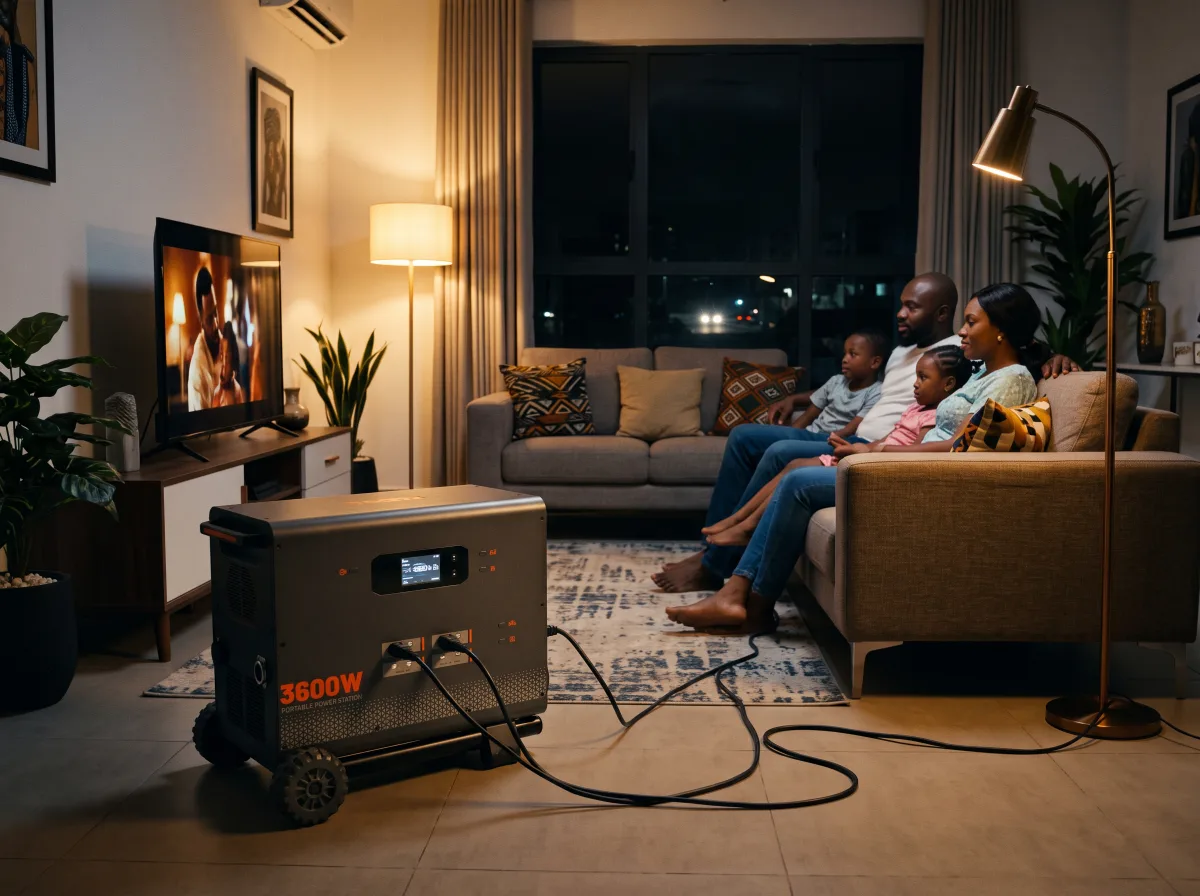
Inverter AC or conventional AC — this decides everything
If you take one thing from this article, take this. The type of air conditioner you own matters more than which power station you buy.
A conventional AC is either fully on or fully off. Every time the compressor kicks in you get the full surge and the full running load.
An inverter AC ramps its compressor up gradually, so the violent startup spike largely disappears. Better still, once the room reaches temperature it throttles down instead of switching off, often settling at forty to sixty per cent of its rated draw.
For battery backup that difference is enormous. An inverter AC is gentler to start and cheaper to keep running. If you are buying an air conditioner and you intend to run it on a power station, buy the inverter type. It will save you more than choosing a bigger battery ever could.
Which TURSAN can actually do it
Being straightforward about this matters more to us than making a sale:
- YC 600S, YC 1100 and YC 1200 — these will not start an air conditioner. At 600W to 1,200W of continuous output they are excellent for lights, fans, televisions, laptops, routers and fridges, but an AC is beyond them. Please do not try.
- YC 2400 — 2,400W output and 2,621Wh of storage. This will run a 1HP inverter AC.
- JC-YT-5K — 5,000W output and 5.22kWh of storage. This handles a 1HP or 1.5HP inverter AC comfortably, and it is the only unit in our range we would put behind a conventional, non-inverter AC.
How long will it actually run?
Assuming the air conditioner is the main load, and allowing for around 85% inverter efficiency:
- YC 2400 with a 1HP inverter AC (about 900W) — roughly 2.5 hours
- JC-YT-5K with a 1HP inverter AC — roughly 5 hours
- JC-YT-5K with a 1.5HP inverter AC (about 1,200W) — roughly 3.5 to 4 hours
These assume a steady draw, which is deliberately pessimistic. A true inverter AC that has cooled the room and throttled back will often stretch well beyond these numbers. Treat them as the floor rather than the ceiling.
You can model your own combination with our load calculator, or read the full wattage guide to see how the smaller appliances add up.
The setup that actually works in a Nigerian home
- Run the AC on its own. Air conditioning plus a freezer plus an iron is not a realistic battery load. AC, some lights and a fan is.
- Cool the room before you need to. Bringing a hot room down costs far more energy than holding a cool one steady.
- Use it at night. Lower ambient temperature means the compressor works less and throttles down sooner.
- Close doors and draw the curtains. Unglamorous, but it changes runtime more than most people expect.
- Add solar if you can. Recharging through the day turns one evening of cooling into something you can repeat.
The realistic goal is a cool bedroom through the night, not air conditioning the whole house around the clock. Anyone promising the second thing from a single battery is not being straight with you.
What we would tell you on WhatsApp
If air conditioning is the main reason you are buying, it is the JC-YT-5K. Nothing smaller will give you a full night of cooling without disappointment.
If you want the AC occasionally and everything else reliably, the YC 2400 is the sensible middle.
And if your air conditioner is an old conventional unit, price up replacing it with an inverter model before you size up your battery. Very often that swap costs less than the jump to the next power station — and it makes everything downstream of it work better.
Frequently Asked Questions
Can a power station run an air conditioner?
Yes, with the right unit. The key number is the compressor startup surge, which can be two to three times the running wattage.
How much power does a 1HP AC use?
Roughly 850–1,000W in real use, with a startup surge of about 2,000–2,700W on a conventional unit.
Does the type of AC matter?
Very much. An inverter AC ramps its compressor up gently and uses less power, so it is much easier for a power station to run than a conventional AC.
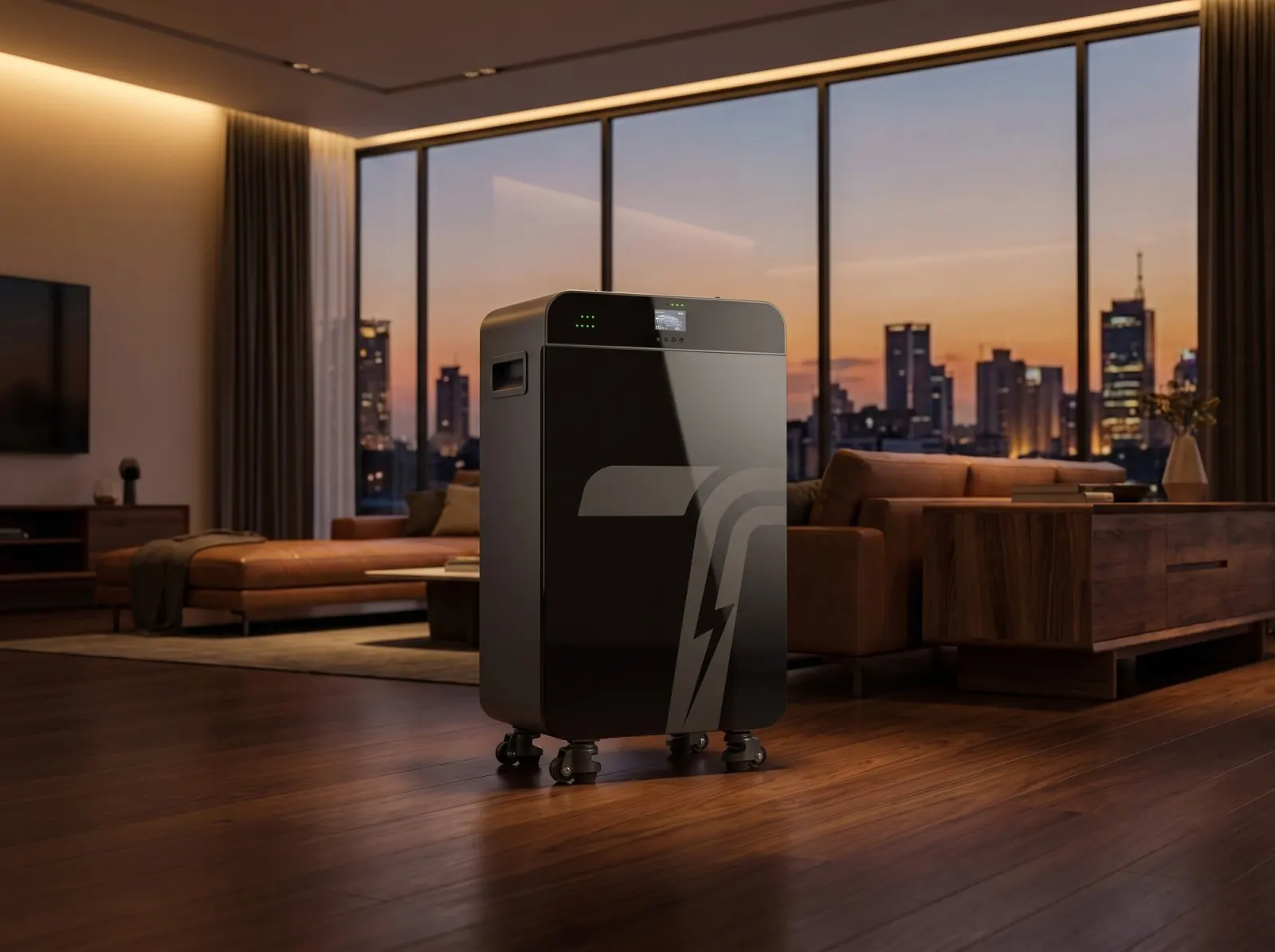
TURSAN JC-YT-5K — 5kW All-In-One Home Battery
5,000W pure sine wave output and 5.22kWh of BYD LiFePO₄ storage. The unit in our range built for air conditioning and whole-home backup.
₦1,650,050 View the JC-YT-5K →