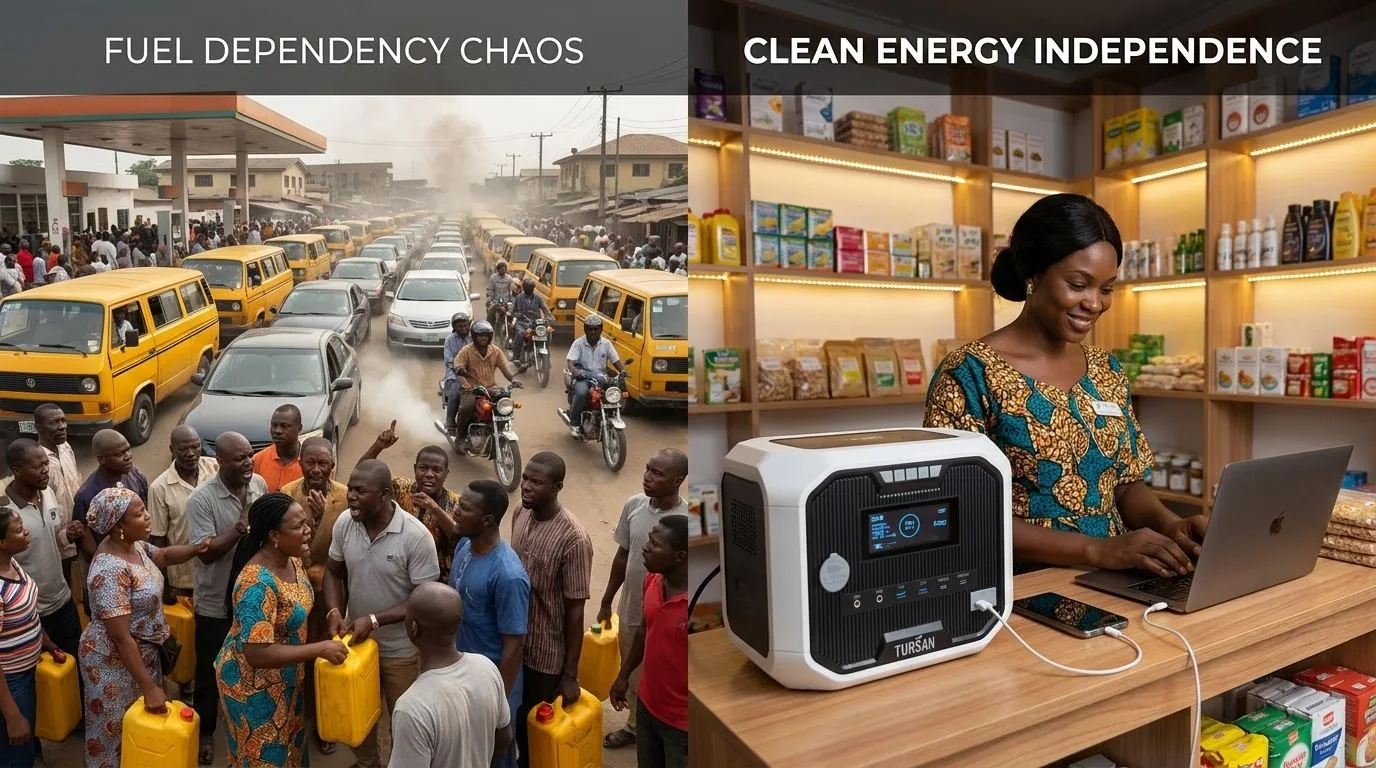
Another week, another fuel crisis. Petrol hits ₦1,000+ per litre. Queues stretch for kilometres. Filling stations shut without warning. And somewhere in Lagos, a business owner watches their generator sputter to a stop — taking their income with it.
If this sounds familiar, you're not alone. Nigeria's fuel scarcity isn't a temporary hiccup — it's a structural problem that has been getting worse every year. And for the millions of small businesses that depend on generators, each price hike and each shortage is a direct hit to the bottom line.
But a growing number of Nigerian entrepreneurs are breaking free from the fuel trap entirely. Here's how — and more importantly, here's the math.
⛽ The Fuel Reality in 2026
Petrol prices have increased over 400% since 2020. What cost ₦165/litre now costs ₦900-1,100/litre depending on your location. For generator-dependent businesses, this isn't an inconvenience — it's an existential threat to profitability.
The Hidden Cost of Fuel Dependency
Most business owners only track the price at the pump. But the true cost of fuel dependency goes far beyond the per-litre price:
1. The Queue Tax
During scarcity, Nigerians spend 3-6 hours in fuel queues. For a business owner, that's half a working day lost — not buying fuel, but waiting to buy fuel. If your time is worth ₦5,000/hour, a single fuel run during scarcity costs you ₦15,000-30,000 in lost productivity before you even pay for the petrol.
2. Black Market Premiums
When stations run dry, the black market fills the gap — at ₦1,500-2,500 per litre. Many businesses have no choice but to pay, because the alternative is closing shop. A generator running 4 hours on black market fuel costs ₦6,000-10,000 per day in fuel alone.
3. Generator Wear and Tear
Generators running on inconsistent, sometimes adulterated fuel break down faster. Spark plugs foul. Carburettors clog. AVRs burn out. The average Nigerian generator owner spends ₦80,000-150,000/year on repairs — costs that wouldn't exist without a generator.
4. The Stress Tax
Will there be fuel tomorrow? Should I buy extra jerry cans? Is that petrol real or mixed with kerosene? This constant mental load isn't free — it steals focus from actually running your business.
The Math: Generator vs Power Station Over 12 Months
Let's put real numbers side by side. We'll compare a typical 3.5kVA generator running 4 hours/day against a TURSAN YC1100 portable power station:
| Cost Category | Generator (Annual) | Power Station (Annual) |
|---|---|---|
| Purchase price | ₦120,000-180,000 | ₦539,999 (one-time) |
| Fuel / Charging | ₦1,260,000-1,890,000 | ₦36,000 (grid) / ₦0 (solar) |
| Oil changes | ₦60,000-96,000 | ₦0 |
| Servicing | ₦60,000-100,000 | ₦0 |
| Repairs | ₦80,000-150,000 | ₦0 |
| Queue time value | ₦180,000-360,000 | ₦0 |
| Year 1 Total | ₦1,760,000-2,776,000 | ₦539,999-575,999 |
| Year 2+ Annual | ₦1,640,000-2,596,000 | ₦0-36,000 |
⚡ The Bottom Line
A TURSAN power station pays for itself in 3-4 months compared to generator running costs. By month 6, you're saving pure profit. By year 2, the gap is over ₦2 million — and the power station still has 3,500+ charge cycles left.
Why Fuel Scarcity Doesn't Affect Power Station Owners
This is the part generator owners don't think about until it's too late. When fuel prices spike or stations run dry:
- Grid charging: Plug into NEPA when it's available. A full charge costs ₦100-200 in electricity — less than a single litre of fuel.
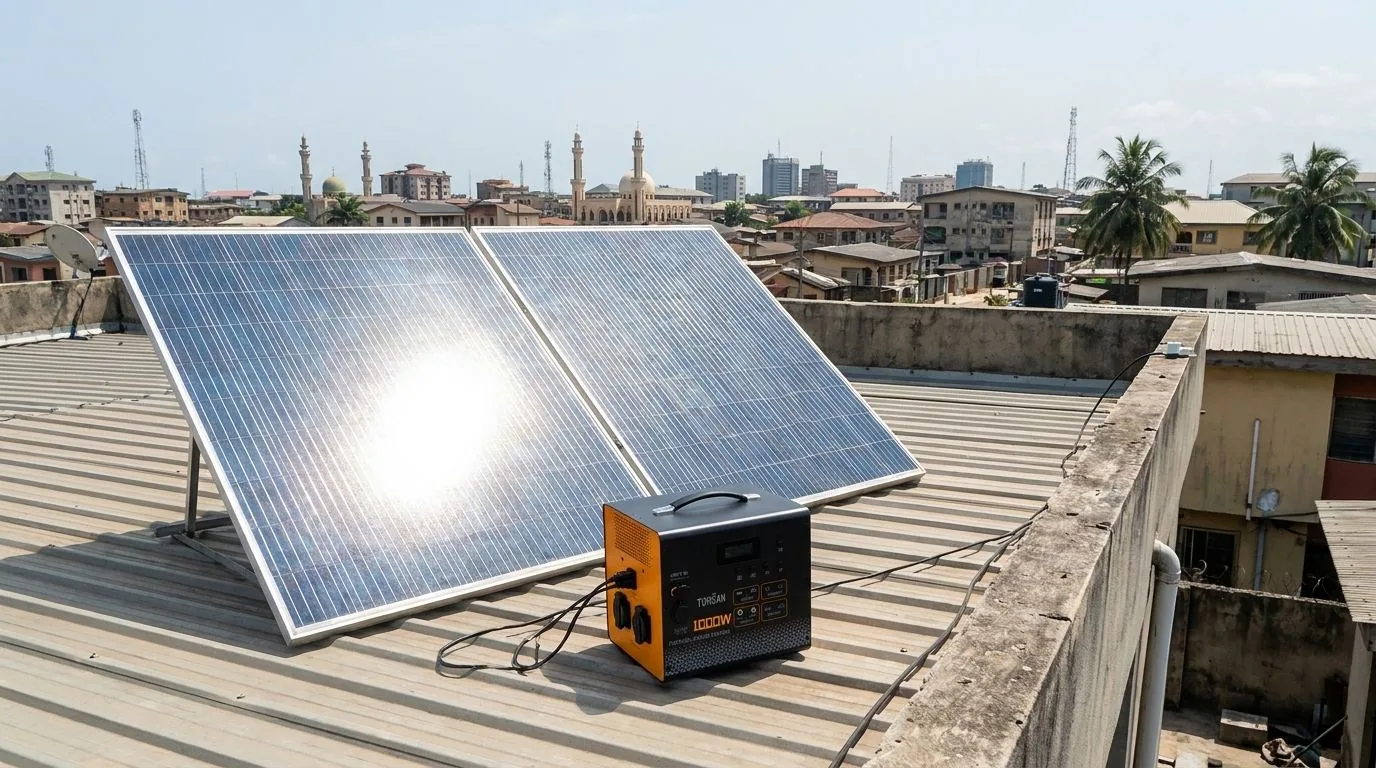
- Solar charging: Pair with a 200W solar panel and charge for free, forever. Nigeria averages 5-7 hours of peak sunlight daily — more than enough for a full charge.
- Car charging: Top up from your car's 12V port while driving to site. No queue, no waiting.
- Zero maintenance: No oil, no filters, no spark plugs, no carburettor cleaning. BYD LiFePO4 cells are rated for 4,000+ cycles — that's 10+ years of daily use.
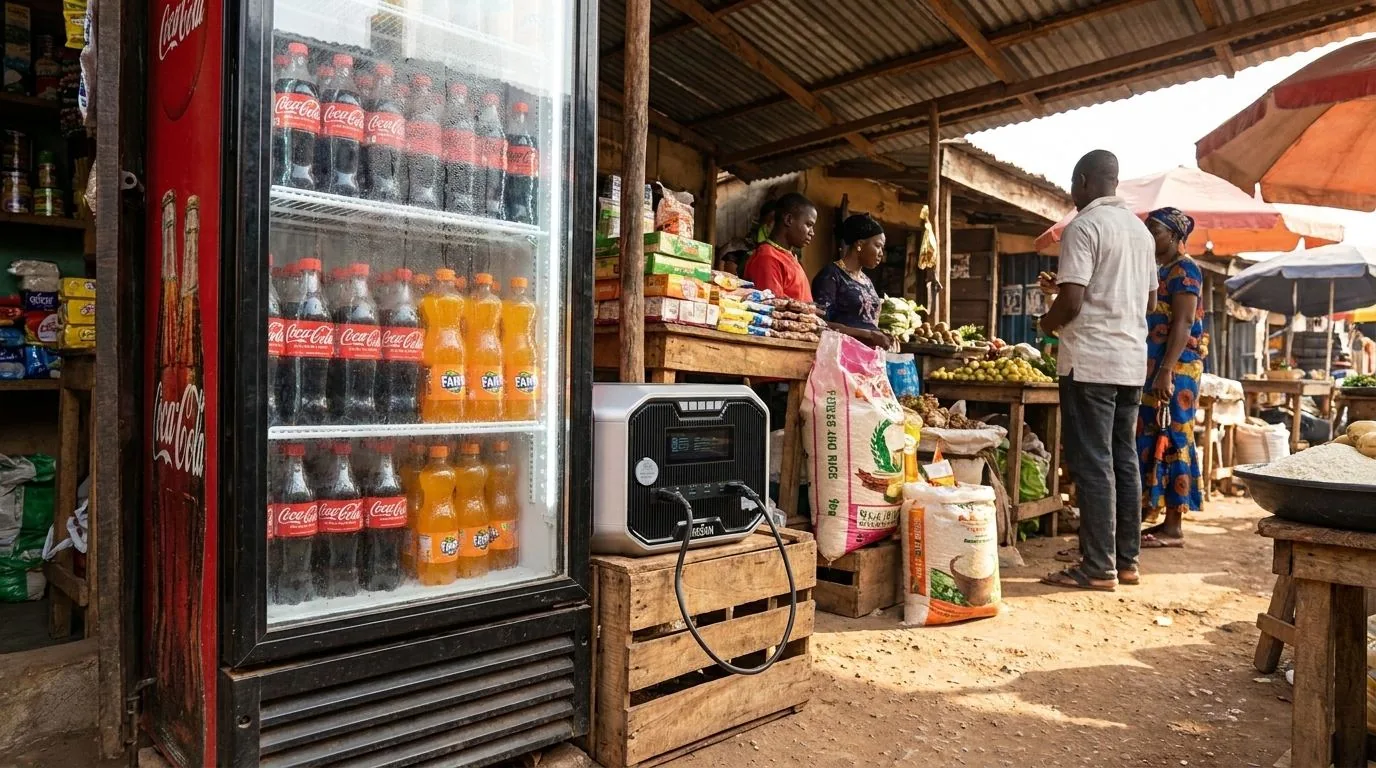
Picture a salon spending ₦45,000 a week on diesel. Charge a power station from the wall overnight, run the clippers and ring light through the day, and a fuel price jump no longer decides whether you open.
— Salon owner, Surulere, Lagos
Which Power Station Fits Your Business?
It depends on what you need to run and for how long:
Small businesses (POS, phone charging, laptop)
The TURSAN YC 600S handles laptops, POS machines, ring lights, routers, and phone charging. Compact enough to carry between locations. Perfect for mobile vendors and remote workers.
Frequently Asked Questions
How much has petrol gone up?
The guide notes petrol rising from about ₦165 per litre in 2020 to roughly ₦900–1,100 per litre, depending on location.
What are the hidden costs of running on fuel?
Time lost in fuel queues, black-market premiums during scarcity, and extra generator repairs from inconsistent or adulterated fuel.
How do businesses escape fuel dependency?
By switching to battery power stations charged from the grid or solar, so a fuel shortage no longer shuts the business down.
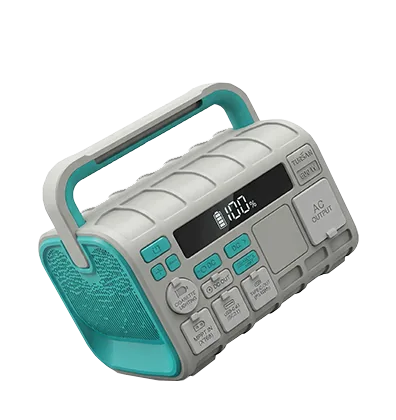
TURSAN YC 600S
600W pure sine wave output. Powers laptops, POS, routers, and lights. Compact and portable — take it anywhere your business goes.
Mid-size businesses (salons, studios, shops)
The TURSAN YC 1100 runs clippers, fans, fridges, sound systems, and multiple devices simultaneously. The workhorse for Nigerian SMEs.
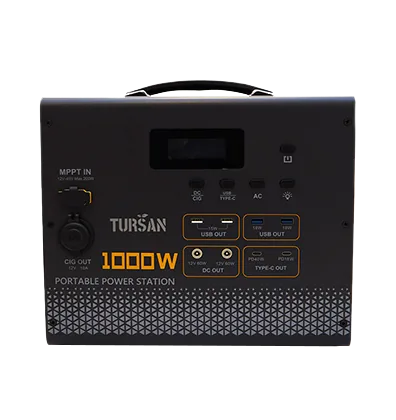
TURSAN YC1100 Portable Power Station
1000W output with 1222Wh capacity. Sheet metal casing, BYD LiFePO4 cells, 4,000+ cycle life. The generator killer for Nigerian businesses.
Large operations (whole-home, workshops, events)
The TURSAN YC 2400 powers fridges, microwaves, power tools, and entire shop setups. When you need to replace a generator completely, this is it.
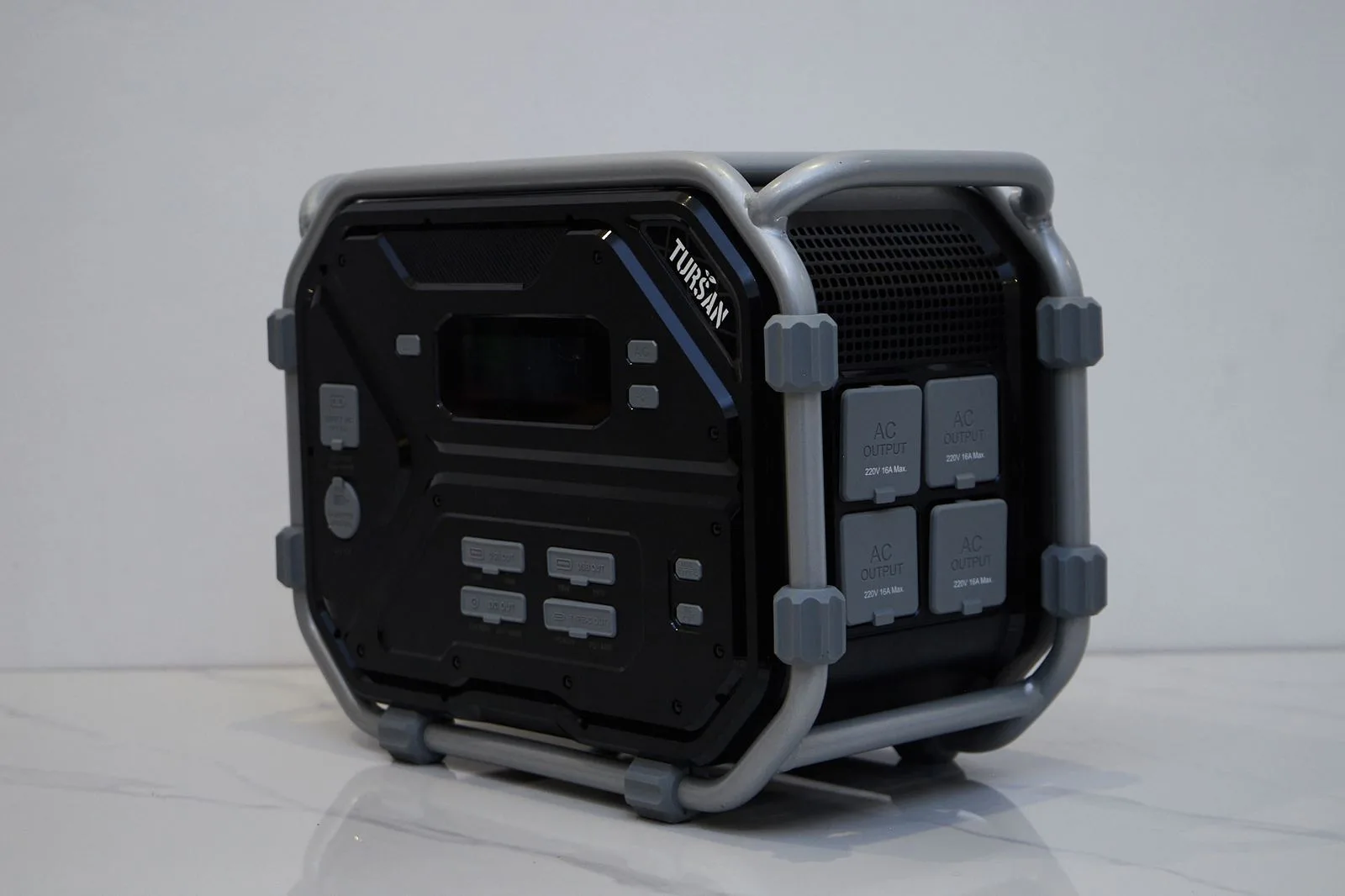
TURSAN YC2400 Portable Power Station
2400W pure sine wave output. BYD LiFePO4, 4,000+ cycles, MPPT solar input. The most powerful unit in the TURSAN lineup.
The Fuel Crisis Is Not Going Away
Let's be honest: Nigeria's fuel problems are structural. Refinery capacity hasn't kept up with demand. Import logistics are unreliable. Subsidy removal has permanently elevated prices. And every year, the scarcity episodes get longer and more frequent.
Businesses that continue depending on generators are betting their livelihood on a supply chain they can't control. Every fuel price increase eats directly into their margins. Every scarcity episode means lost revenue.
Meanwhile, businesses that switched to portable power stations have locked in their energy costs at zero (with solar) or near-zero (with grid charging). They don't queue. They don't negotiate with black marketers. They don't cancel client appointments because the generator ran out of fuel.
💡 The Smart Move
You can't control fuel prices. You can't control when stations will have supply. But you can control whether your business depends on fuel at all. A one-time investment in a TURSAN power station eliminates fuel dependency permanently — and pays for itself within months, not years.
Ready to Break Free from Fuel?
Every day you run a generator is another day you're paying the fuel tax. The switch isn't complicated:
- Choose your model based on what you need to power (use our wattage guide)
- Order online with free Lagos delivery — or pay on delivery
- Charge it once from the wall or solar panel
- Never queue for fuel again
Your competitors are still in that fuel queue. You don't have to be.