Most people shopping for a home battery in Nigeria look at one number: kWh — how much power it stores. That is the right question, but it is not the only one. Sitting quietly next to the capacity is a spec that decides how well your whole system runs: the voltage. 24V or 48V.
It sounds like a detail you can leave to the installer. It is not. Get it wrong and you either overpay for a system bigger than your house needs, or you buy something that chokes the day you add an air conditioner. Here is what the number actually means — in plain terms — and how to choose.
The trap most buyers fall into
Two batteries can store the exact same kWh and still behave completely differently under load. The one running at a higher voltage stays cooler and wastes less power — and nobody selling on price alone will mention it.
What voltage actually changes
Power is voltage multiplied by current. That is the whole thing. If two batteries deliver the same power, the higher-voltage one does it with less current — and current is what creates heat and gets lost in cables.
A 48V system pushes the same wattage at roughly half the current of a 24V system. Less current means thinner cables do the job, less energy is wasted as heat, and the system runs cooler under heavy load. That is the entire engineering case for 48V in one sentence. At small loads you will never notice. At big loads — a water pump, an AC, a whole house — you will.
When 24V is the smart choice
24V is not "the cheap option." For a lot of Nigerian homes it is the right-sized option.
Go 24V if you are powering essentials and some comfort — lights, fans, TV, decoder, phones, laptops, a fridge, maybe one AC in a modest setup; if you want a simpler, lower-entry-cost system that still uses proper LiFePO₄ chemistry; and if you are not planning to keep stacking on big appliances later.
In our range that is the TURSAN TSA-24V200Ah (5.22kWh) — a single sealed unit, no series-wiring headaches, paired with a matching 24V inverter.
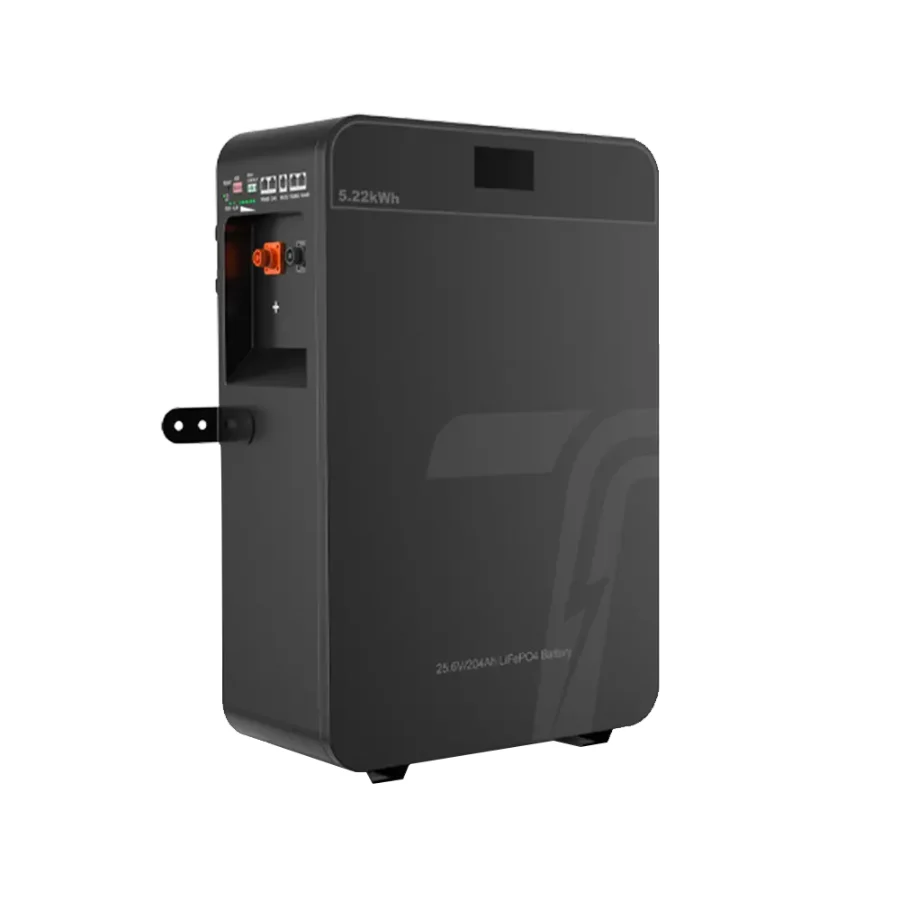
The 24V TSA-24V200Ah — the right-sized option.
When 48V is worth it
48V earns its keep the moment your loads get serious or your ambitions grow.
Go 48V if you want to run heavier or multiple loads at once — more than one AC, a water pump, a full home rather than a "power room"; if you care about efficiency and staying cool under sustained load; and if you want room to expand, because 48V systems scale up more cleanly and the bigger battery banks live at this voltage.
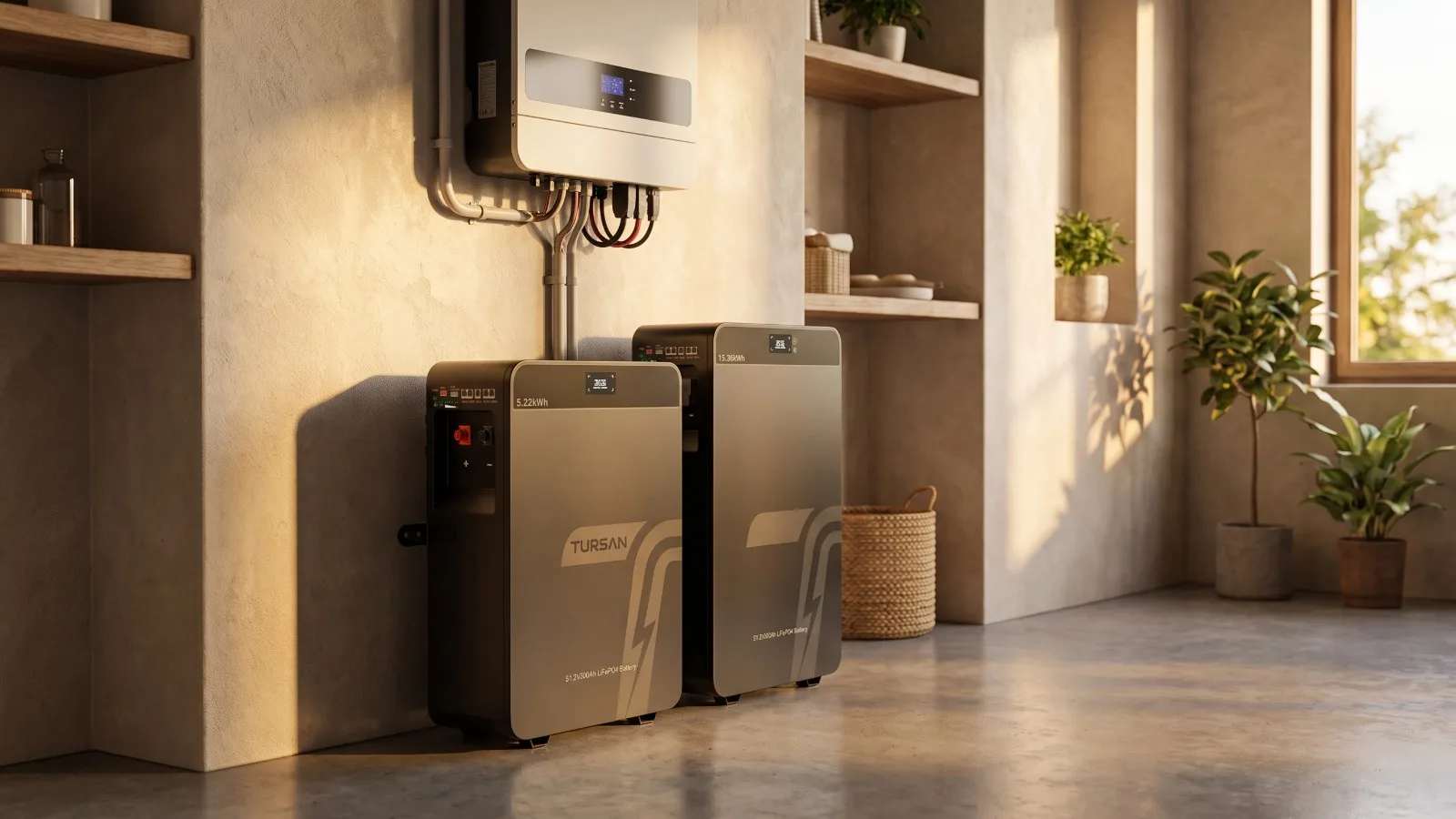
That is the TURSAN TSA-LFP48 series — 48V banks from the LFP48-100 up to the LFP48-320 at 15.36kWh — and the JC-YT-5K all-in-one, which is built around 48V for exactly this reason.
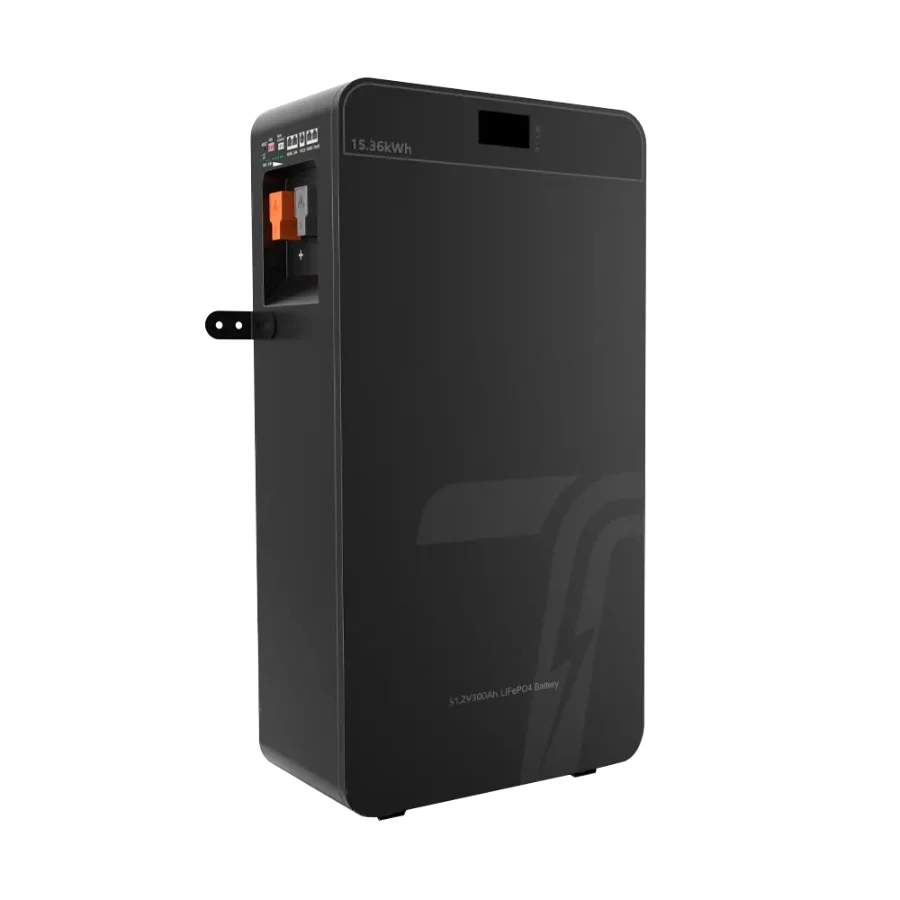
The 48V TSA-LFP48 series — built to scale.
The one rule people forget
Your battery voltage must match your inverter. A 48V battery will not work with a 24V inverter, or the other way round. They are a matched pair, chosen together — not two parts you buy separately and hope fit.
So which one do you actually need?
Do not think "which battery" in isolation — think "which system." Pick the voltage based on the loads you really run, then buy the battery and inverter to match:
- Choose 24V for an essentials-plus-comfort setup and a simpler, lower-cost start — the TSA-24V200Ah.
- Choose 48V for heavy loads, a whole home, or if you want to expand later — the TSA-LFP48 series or the JC-YT-5K.
Same chemistry, same reliability. The voltage just decides how hard your system can work and how far it can grow. If you are not sure what your loads add up to, that is a five-minute conversation, not a guess.
Frequently Asked Questions
Is 48V better than 24V?
Not universally — it is better for bigger loads and future expansion, because it moves the same power with less current, less heat and less loss. For a modest essentials setup, 24V is perfectly capable and costs less to get into.
Can I upgrade from 24V to 48V later?
Not by swapping the battery alone. Because the inverter has to match the battery voltage, moving to 48V means changing the system, not just the battery. If you already know you will grow, it is cheaper to start at 48V.
Does 48V use less electricity?
It does not reduce what your appliances consume, but it wastes less energy inside the system — lower current means less is lost as heat in the cables, so more of your stored power reaches your appliances.
Which one runs an air conditioner?
Both can, within their limits. One AC in a right-sized setup is comfortable on 24V. Multiple ACs, or an AC plus other heavy loads at the same time, is where 48V pulls ahead.
How do I know what size I need?
Add up the appliances you want to run at the same time (watts) and how long you need them (kWh). That gives capacity; the load level gives the voltage. Send us your list and we will size it with you.
Still weighing it up? Send your appliance list on WhatsApp and we will tell you exactly which system fits — 24V or 48V — no guesswork.
TURSAN TSA-24V200Ah
5.22kWh 24V BYD LiFePO₄ battery — the right-sized 24V option for essentials and comfort.