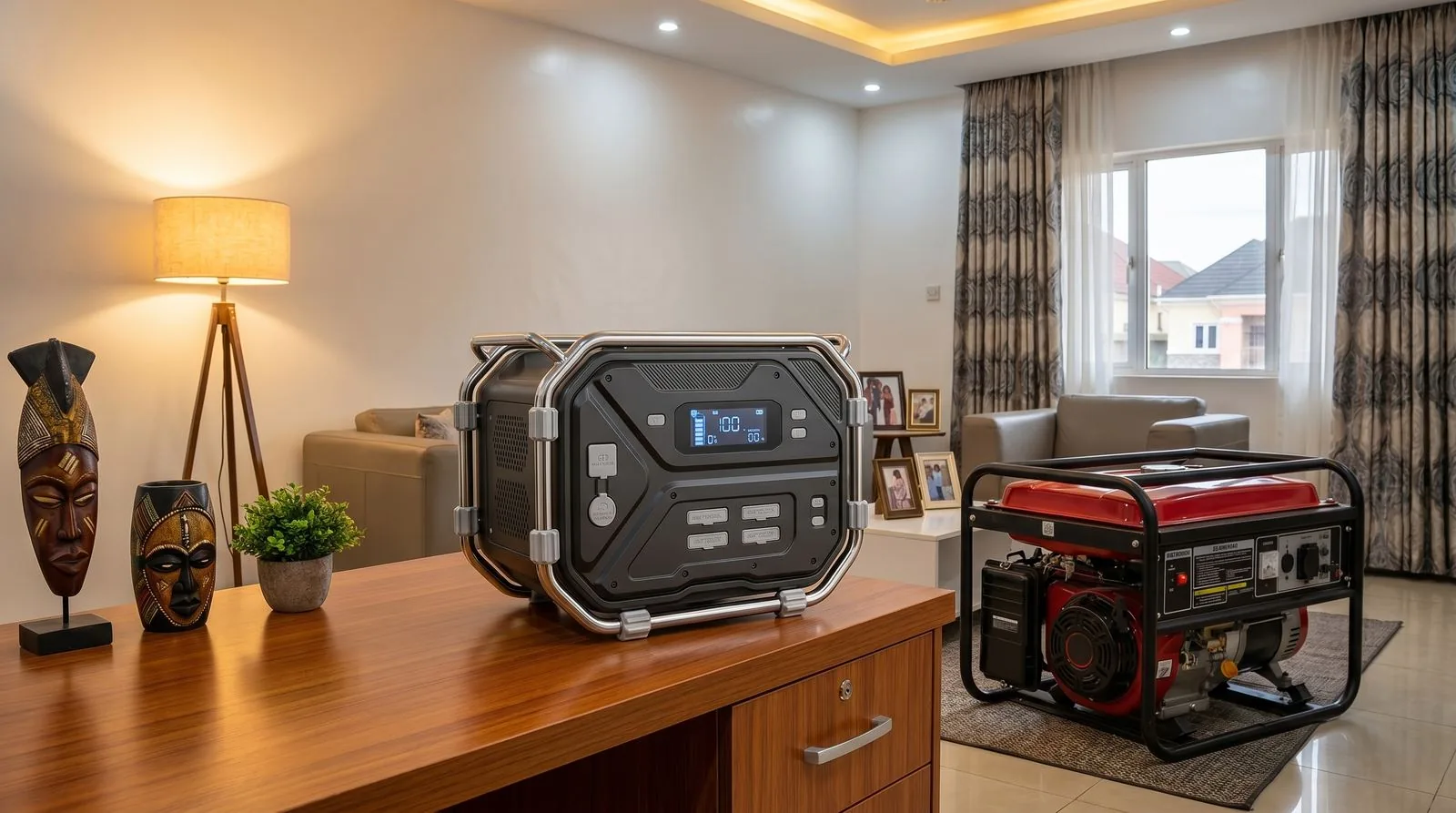
We sell portable power stations. So you'd expect us to say "yes, throw away your generator immediately." But we won't, because that would be dishonest.
The truth is more nuanced than most brands will admit. A power station CAN fully replace a generator for many Nigerian households and businesses. But for some use cases, it can't — at least not yet. This article gives you the honest breakdown so you can make the right decision for YOUR situation.
🚨 Why This Conversation Matters
Nigerians spend huge sums every year on generator fuel. That's money literally going up in smoke. Even a partial reduction — replacing your generator for 60-70% of use cases — represents massive savings for families and businesses across the country.
Where a Power Station FULLY Replaces a Generator
Let's start with the good news. For these use cases, a power station is not just a replacement — it's a significant upgrade:
1. Home Entertainment and Comfort
TV, DSTV decoder, fans, LED lighting, phone charging, Wi-Fi router. This is what 90% of Nigerian homes actually use a generator for during outages. A TURSAN YC1200 handles all of this simultaneously for 3-5 hours. No fuel, no noise, no fumes. It's a complete replacement.
2. Remote Work and Home Offices
Laptop, monitor, router, desk lamp, phone charger. Total load: 150-220W. Even the YC600S handles this for 4+ hours. If you're running a generator just to power your laptop and Wi-Fi, you're spending ₦700/hour on fuel for a 150W load. That's absurd.
3. POS Agents and Small Vendors
POS terminal, phone charger, small fan, LED lighting. Total load: 80-120W. A YC600S powers this all day. POS agents who used to lose transactions during outages now stay operational. The power station pays for itself within 2-3 months from prevented transaction losses alone.
4. Small Shops and Retail
Lighting, fan, phone charging station, POS, small radio/speaker. Total load: 150-250W. The YC1100 keeps a small shop running through any typical outage without the generator noise that drives away customers.
5. Fridge Shops and Cold Drink Sellers
Here's where it gets interesting. A small display fridge runs at 80-120W continuously. A TURSAN YC 2400 can keep a display fridge running for 6+ hours during an outage — enough to keep drinks cold and inventory safe. Cold drink sellers in markets across Lagos are already using this setup to avoid the ₦3,000-5,000/day fuel cost of running a generator just for their fridge.
⚡ Real Case: Fridge Shop in Oshodi Market
A drinks seller in Oshodi was spending ₦4,500/day on generator fuel to keep his display fridge running during outages — that's ₦135,000/month. He switched to a TURSAN YC2400 with a 200W solar panel. His monthly power cost dropped to under ₦5,000 (grid charging on good days, solar on bad days). The system paid for itself in 12 months.
Where a Power Station CANNOT Replace a Generator (Yet)
Honesty time. Here are the use cases where a generator is still necessary:
1. Air Conditioning
A typical split AC unit draws 1,500-2,500W with startup surges of 3,000-5,000W. No portable power station in the TURSAN range can handle this. If you absolutely need AC during outages, you still need a generator or a large inverter system with deep-cycle batteries.
2. Industrial/Commercial Bakery Ovens
Electric bakery ovens draw 3,000-10,000W. A power station won't run these. However — and this is key — smart bakeries in Lagos are using a hybrid approach: the generator runs the oven, while a TURSAN power station handles everything else (lighting, fans, POS, phone charging, display fridge). This cuts generator runtime by 60-70% and saves massive fuel costs.
3. Welding Equipment and Heavy Machinery
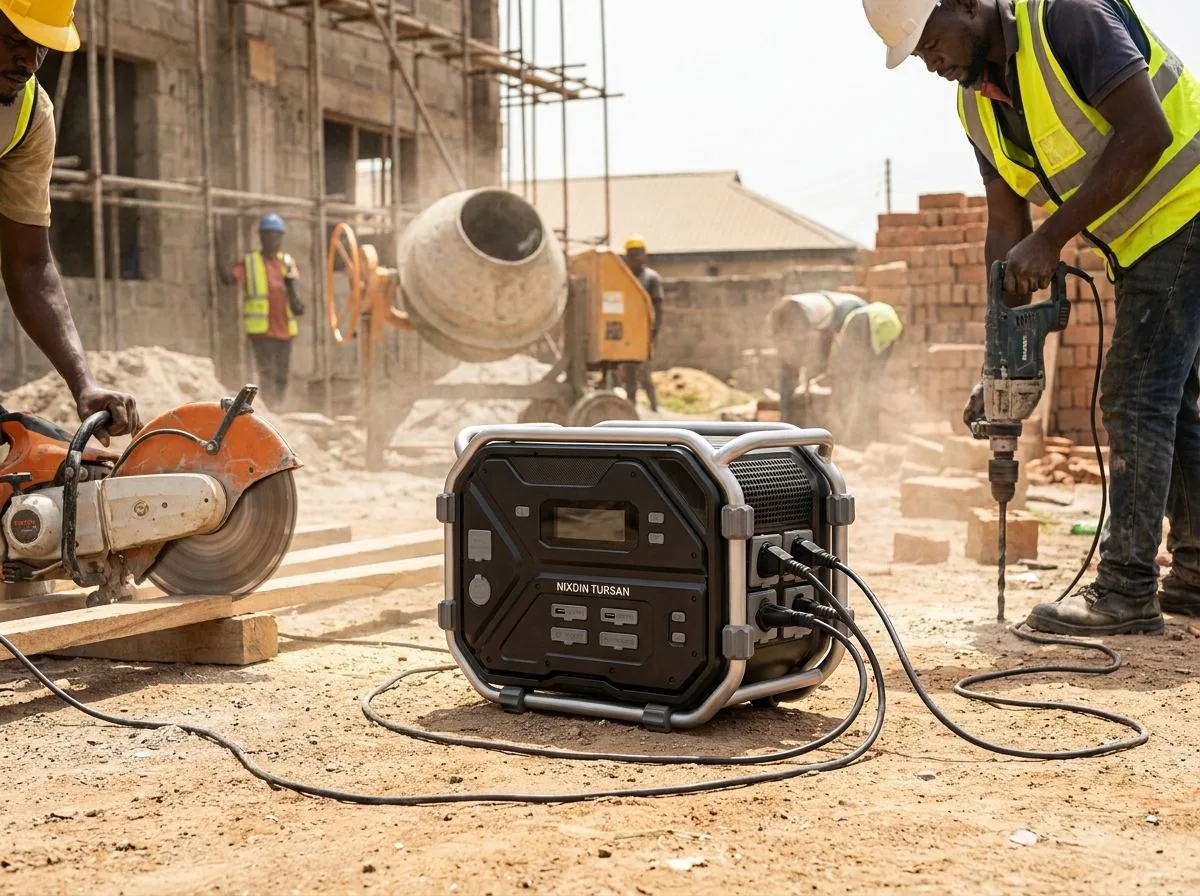
Welding machines draw 3,000-8,000W. Industrial compressors, heavy-duty water pumps, and commercial laundry machines also exceed portable power station capacity. These remain generator territory.
4. Whole-House Power for Large Homes
If you want to power your entire 4-bedroom house including water heater, washing machine, and AC, a portable power station won't do it. But consider: do you actually NEED all of that during a 3-hour outage? Most families just need lights, fans, TV, and phone charging — which a power station handles perfectly.
5. 24-Hour Continuous Operation
If you need uninterrupted power for 12-24 hours straight (some rural areas), a single power station won't last. However, pairing it with solar panels extends runtime dramatically, and for truly extended outages, the hybrid approach works best.
| Use Case | Can Power Station Replace Generator? | Recommendation |
|---|---|---|
| Home entertainment (TV, fans, lights) | Yes, completely | YC1200 or YC2400 |
| Remote work / home office | Yes, completely | YC600S or YC1100 |
| POS / small vendor | Yes, completely | YC600S |
| Small shop / retail | Yes, completely | YC1100 or YC1200 |
| Display fridge / cold drinks | Yes, for 4-8 hours | YC 2400 |
| Salon (clippers, low dryer) | Yes, mostly | YC 1200 |
| Air conditioning | No | Keep generator |
| Electric oven / bakery | No (use hybrid) | Generator + YC2400 |
| Welding / heavy machinery | No | Keep generator |
| Whole-house (large, with AC) | No | Generator or full inverter system |
The Hybrid Approach: The Smartest Strategy
The most financially savvy Nigerians aren't choosing between a generator and a power station. They're using both — strategically.
Here's how the hybrid approach works:
- Power station handles 70-80% of outages: Short outages (1-4 hours) and light loads (lights, fans, electronics) go to the power station. Zero fuel cost.
- Generator handles the remaining 20-30%: Extended outages requiring heavy appliances (AC, oven, large machinery) trigger the generator. But it runs far less often.
- Result: Generator fuel consumption drops by 60-80%. Maintenance intervals stretch from weeks to months. Generator lifespan extends by years.
⚡ Real Case: Bakery in Surulere
A bakery in Surulere was running their 5kVA generator 8 hours daily — ₦8,400/day in fuel alone. They added a TURSAN YC2400 to handle lighting, fans, display fridge, POS, and phone charging. Now the generator only runs 2-3 hours for the oven. Monthly fuel cost dropped from ₦252,000 to ₦75,000. The YC2400 paid for itself in 9 months.
The Transition Guide: Moving from Generator to Power Station
If you're ready to make the switch (full or hybrid), here's a step-by-step approach:
Step 1: Audit Your Power Needs
For one week, write down every appliance you run during outages. Note the wattage (usually printed on the appliance or in the manual). Add them up. This is your baseline load.
Step 2: Separate "Essential" from "Nice to Have"
Lights, fan, router, phone charging = essential. AC, washing machine, electric cooker = nice to have. Your power station should cover ALL essentials. The nice-to-haves can wait for grid power or the generator.
Step 3: Choose the Right Size
Match your essential load to the right TURSAN model. Add 20-30% headroom for surge protection and future additions. When in doubt, go one size up.
Step 4: Start with the Power Station as Primary
When power goes, reach for the power station first. Only start the generator if the outage extends beyond the power station's capacity OR you need heavy appliances.
Step 5: Track Your Savings
Keep a log of generator fuel purchased before and after adding the power station. Most users see a 50-70% reduction in fuel costs within the first month.
But What About Solar?
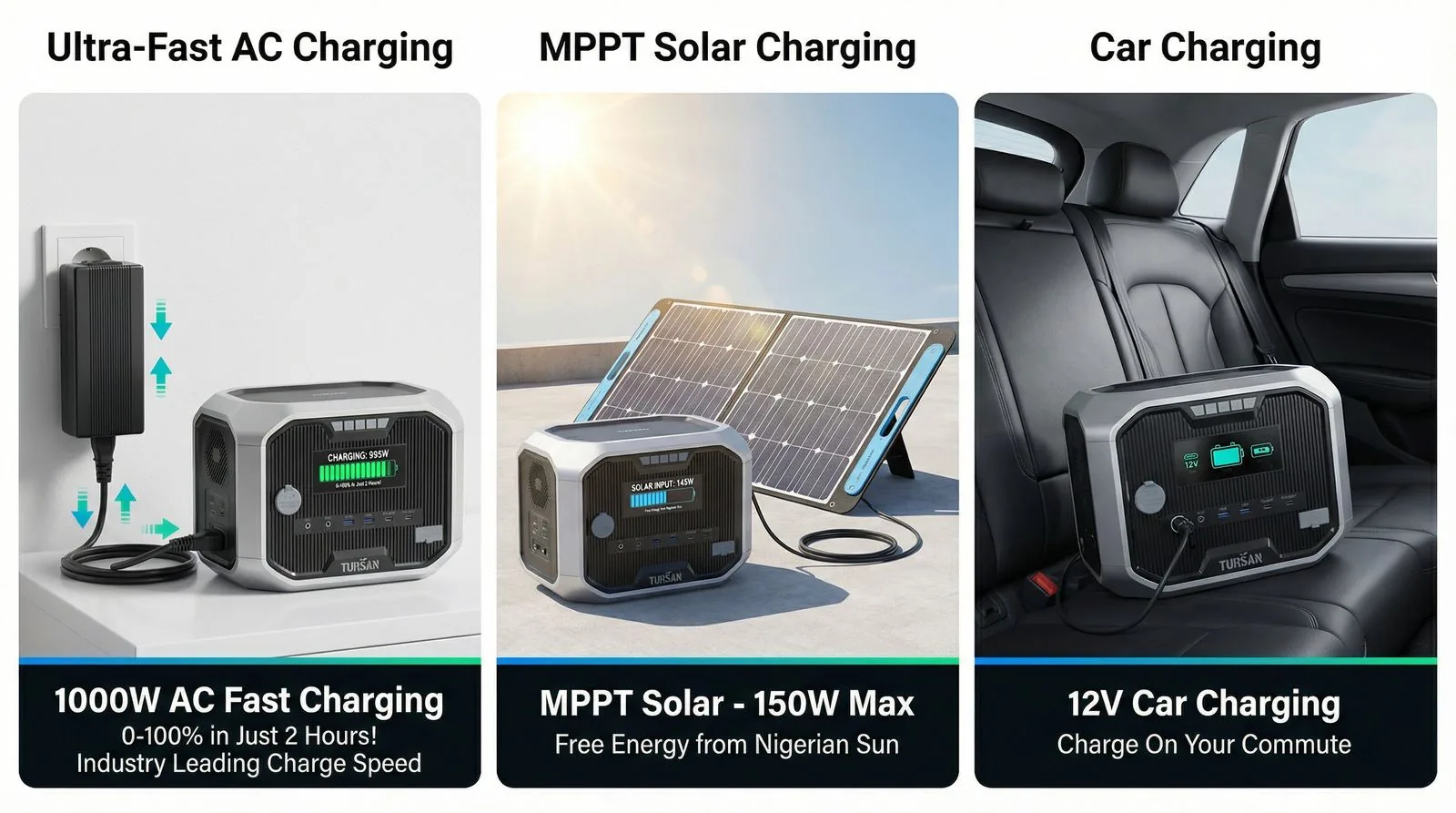
Adding a solar panel to your TURSAN power station changes the equation dramatically. All TURSAN models include MPPT solar charge controllers — the most efficient solar charging technology available.
With a 200W solar panel (₦80,000-₦120,000):
- The power station recharges during daylight hours while you use it
- Extended outages become manageable — you're generating your own power
- In some cases, solar + power station completely eliminates the need for BOTH grid power and generator during the day
- Your total fuel cost drops to literally ₦0
The Financial Case: 3-Year Cost Comparison
| Cost Item | Generator Only | Hybrid (Gen + YC2400) | Power Station + Solar |
|---|---|---|---|
| Equipment cost | ₦150,000 | ₦1,500,000 | ₦1,450,000 |
| Year 1 fuel | ₦1,260,000 | ₦378,000 | ₦0 |
| Year 2 fuel | ₦1,386,000 | ₦415,800 | ₦0 |
| Year 3 fuel | ₦1,524,600 | ₦457,380 | ₦0 |
| 3-year maintenance | ₦270,000 | ₦81,000 | ₦0 |
| 3-YEAR TOTAL | ₦4,590,600 | ₦2,832,180 | ₦1,450,000 |
*Fuel costs assume 10% annual increase. Generator maintenance includes oil changes, spark plugs, filters, and one major repair. Solar panel cost (₦100,000) included in Power Station + Solar column.
The Verdict: It Depends on YOU
"The question isn't whether to ditch your generator. It's how much of your generator usage you can shift to cleaner, cheaper, silent power — and the answer, for most Nigerians, is 'most of it.'"
For 70-80% of Nigerian households and small businesses, a portable power station can fully replace the generator. You simply don't need 3,500W of loud, fuel-burning capacity to charge your phone, run your fan, and watch TV.
For the remaining 20-30% who need heavy appliances, the hybrid approach saves you hundreds of thousands of naira per year while extending your generator's life.
Either way, the generator-only approach is the most expensive option. The numbers prove it.
Frequently Asked Questions
Can a power station fully replace a generator?
For many homes and businesses, yes: entertainment, fans, lights, remote work, POS and small shops. For some heavy uses, not yet.
Can a power station power a home office?
Yes. A laptop, monitor, router, lamp and phone charger draw about 150–220W, which the YC 600S handles for 4+ hours.
Which model covers TV, decoder, fans and lights together?
The TURSAN YC 1200 runs all of these at once for about 3–5 hours.
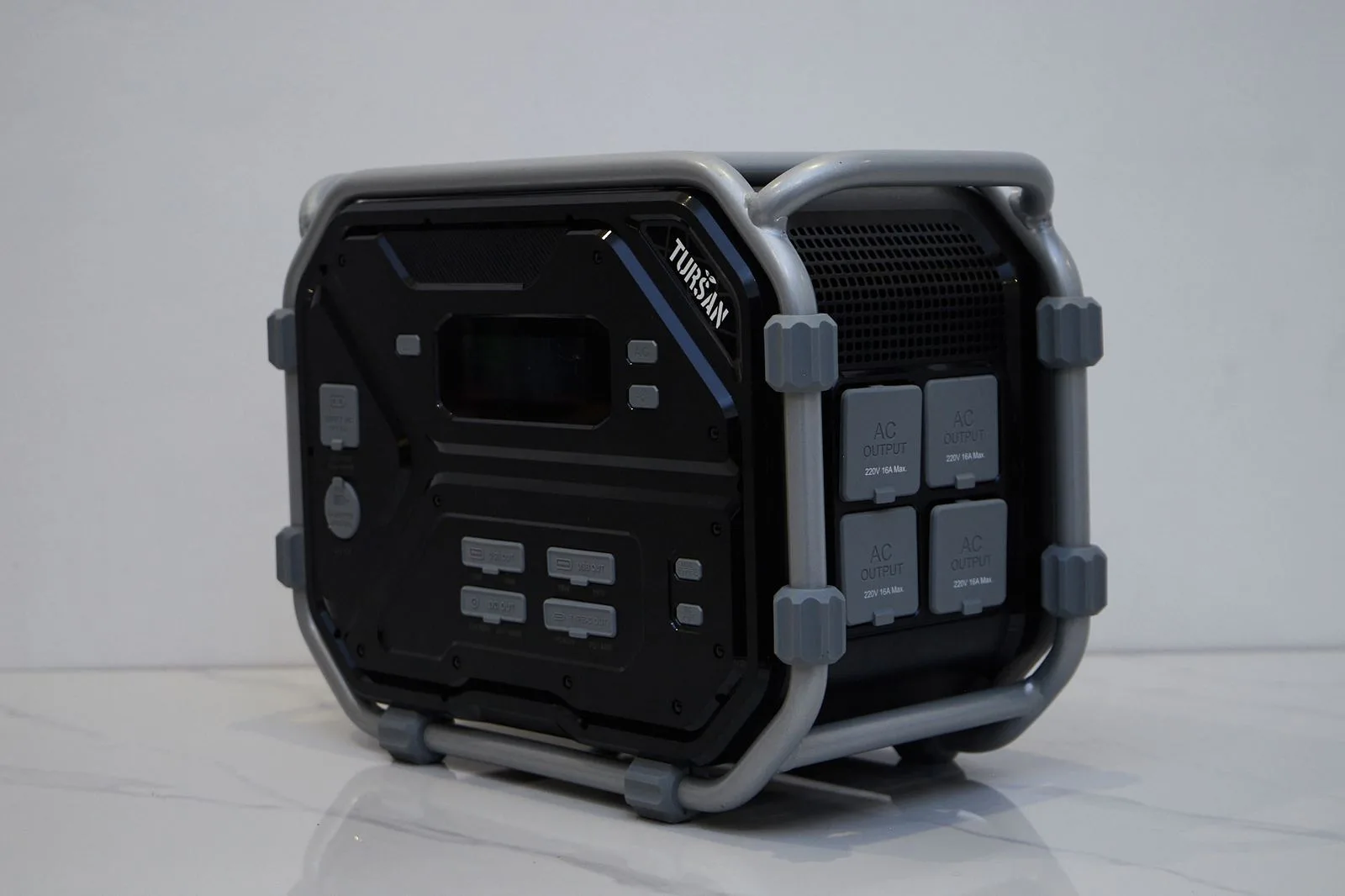
TURSAN YC2400 Portable Power Station
One of the most powerful units in our lineup. 2400W pure sine wave output handles fridges, microwaves, power tools, and entire shop setups. BYD LiFePO4 battery, 4,000+ cycles, MPPT solar input. The generator killer — or the perfect generator companion. 2-year warranty included.