
Walk into any generator shop in Nigeria and you'll hear one word over and over: kVA. "This one na 3.5kVA." "You need 5kVA for that house." Then you look at a power station or inverter and it's rated in watts or kW instead. Same job — backup power — but two different units. So which is actually bigger, and how do you compare them without getting oversold?
The good news: once you understand the single number that connects kVA and kW, you'll size your backup power correctly and never pay for a rating you don't actually use.
kW is the power you actually use. kVA is the power the machine has to supply.
Every appliance draws two kinds of power. Real power, measured in kilowatts (kW), is the part that does the actual work — spinning the fan, cooling the fridge, lighting the bulb. Apparent power, measured in kilovolt-amps (kVA), is the total power the source must deliver, including a portion that sloshes back and forth inside motors and compressors without doing any useful work.
For a simple resistive load — a bulb, a kettle, a pressing iron — kVA and kW are almost identical. But for anything with a motor or compressor — a fridge, a freezer, an air conditioner, a water pump — the two numbers drift apart.
The one number that connects them: power factor
kW = kVA × power factor. Power factor is simply how much of the supplied power actually does work. Most Nigerian generators are quoted at a power factor of 0.8. So a "3.5kVA" generator really only delivers about 2.8kW of usable power — the rest is headroom the engine carries but you never put to work.
Convert any kVA rating into real, usable kW
Multiply the kVA figure by 0.8 and you get the honest kW number — the one you can compare directly against an inverter or power station:
| Generator rating (kVA) | Real usable power (kW) |
| 1.0 kVA | 0.8 kW |
| 2.5 kVA | 2.0 kW |
| 3.5 kVA | 2.8 kW |
| 5.0 kVA | 4.0 kW |
| 7.5 kVA | 6.0 kW |
This is why a comparison that surprises people is actually true: a 3.6kW inverter delivers more real power than a 3.5kVA — or even a 4.5kVA — generator. The inverter is rated in the honest unit already.
Why inverters and power stations are rated in kW (and why that's better for you)
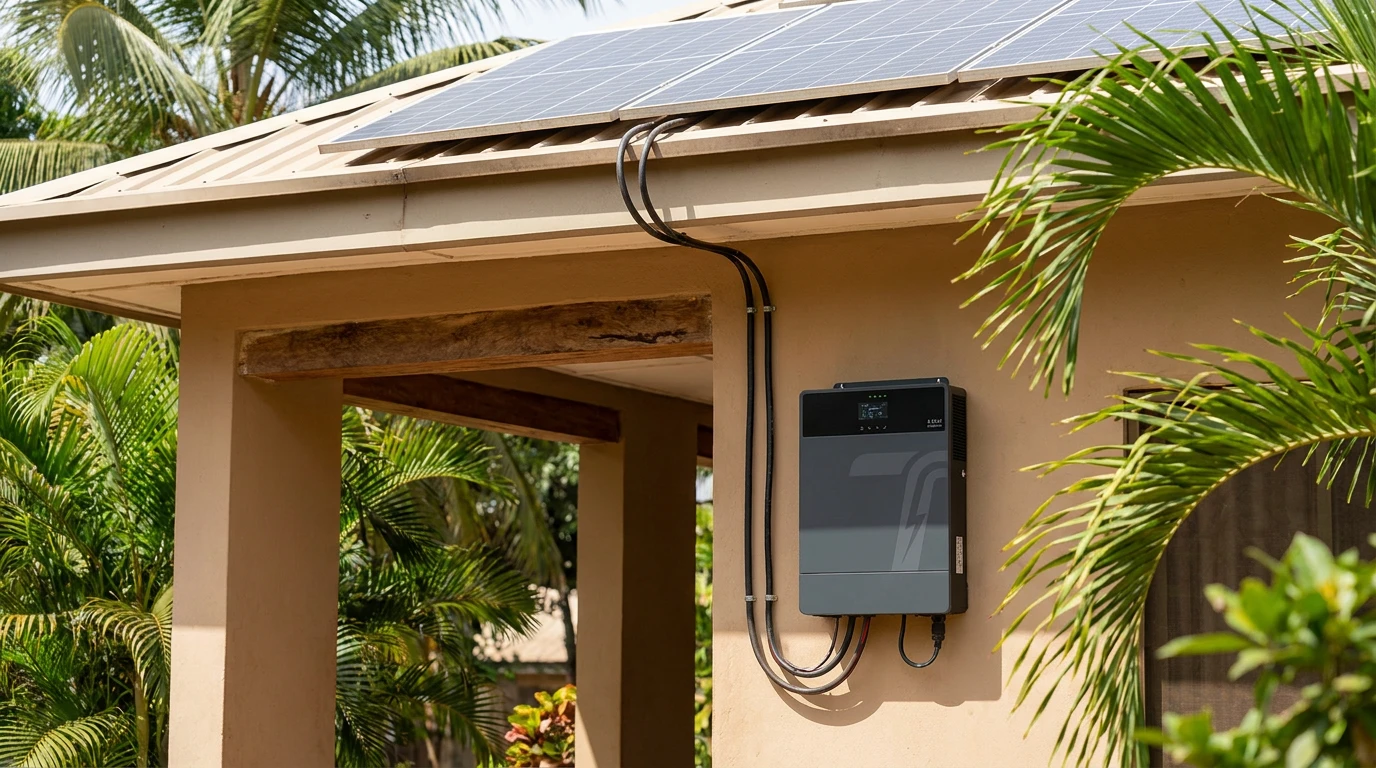
A TURSAN inverter or power station is rated in the power it will actually hand your appliances — watts and kW, not kVA. There's no 0.8 discount to remember. When the box says the TURSAN JC-AC-3.6KW does 3.6kW, that's 3.6kW at the socket. A 1000W power station gives you 1000W. The number on the box is the number you get.
That also makes sizing simple: add up the wattage of the appliances you want to run, add headroom for motor start-up surge, and match it to a kW rating. No unit conversion, no salesman maths.
Don't fall for "5kVA sounds bigger than 5kW"
It isn't. 5kW is real power; 5kVA is apparent power that works out to roughly 4kW usable. Comparing a 5kVA generator to a 5kW inverter and assuming the generator is stronger is exactly the mistake that leads people to buy — and fuel — far more than they need.
So how many kW do YOU actually need?
Forget kVA and start from your appliances. A few LED bulbs, a couple of fans, a TV and a laptop rarely add up to even 1kW. Add a fridge and you're still under 1.5kW of running load — though the compressor will briefly surge higher each time it kicks in. It's only when you add a full-size air conditioner or a water pump that you climb toward 3kW and beyond.
Rather than guess, tick your appliances in our free sizing calculator — it adds up your real watts, accounts for start-up surge, and tells you the exact TURSAN unit that fits, along with how long it will run.
Try the free power calculator →
The bottom line
kVA is what the source must supply; kW is what you actually use; power factor (usually 0.8) is the bridge between them. Generators are sold in the flattering unit — kVA. Inverters and power stations are sold in the honest one — kW. Convert before you compare, size from your real watts, and you'll buy backup power that fits your home instead of your seller's stock.
Frequently Asked Questions
What is the difference between kVA and kW?
kW is the real power that does work. kVA is the total power the source supplies. kW = kVA × power factor.
How much usable power does a 3.5kVA generator give?
About 2.8kW, using the 0.8 power factor most Nigerian generators are quoted at.
Is a 3.6kW inverter bigger than a 3.5kVA generator?
Yes. A 3.6kW inverter delivers more real, usable power than a 3.5kVA generator, which gives about 2.8kW.
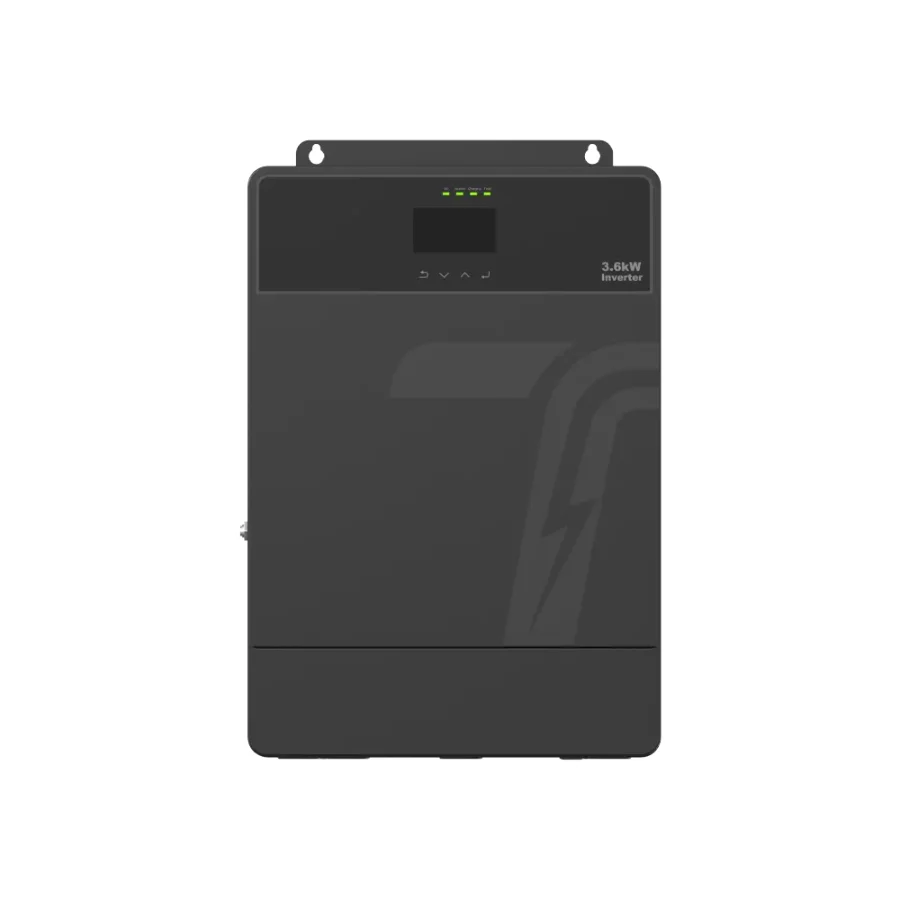
TURSAN JC-AC-3.6KW
3.6kW of real, pure sine wave power — rated in the unit that matters. Pairs with a 24V battery for whole-home backup.