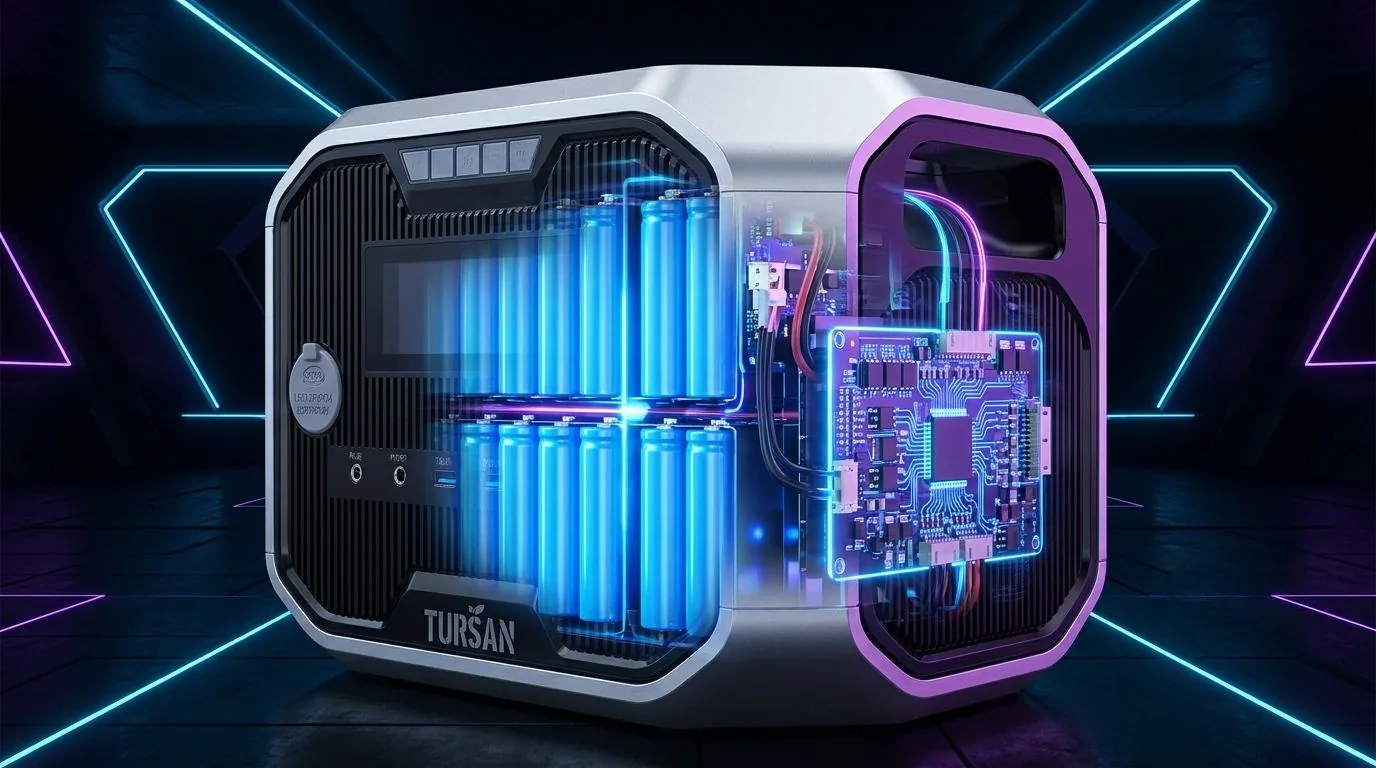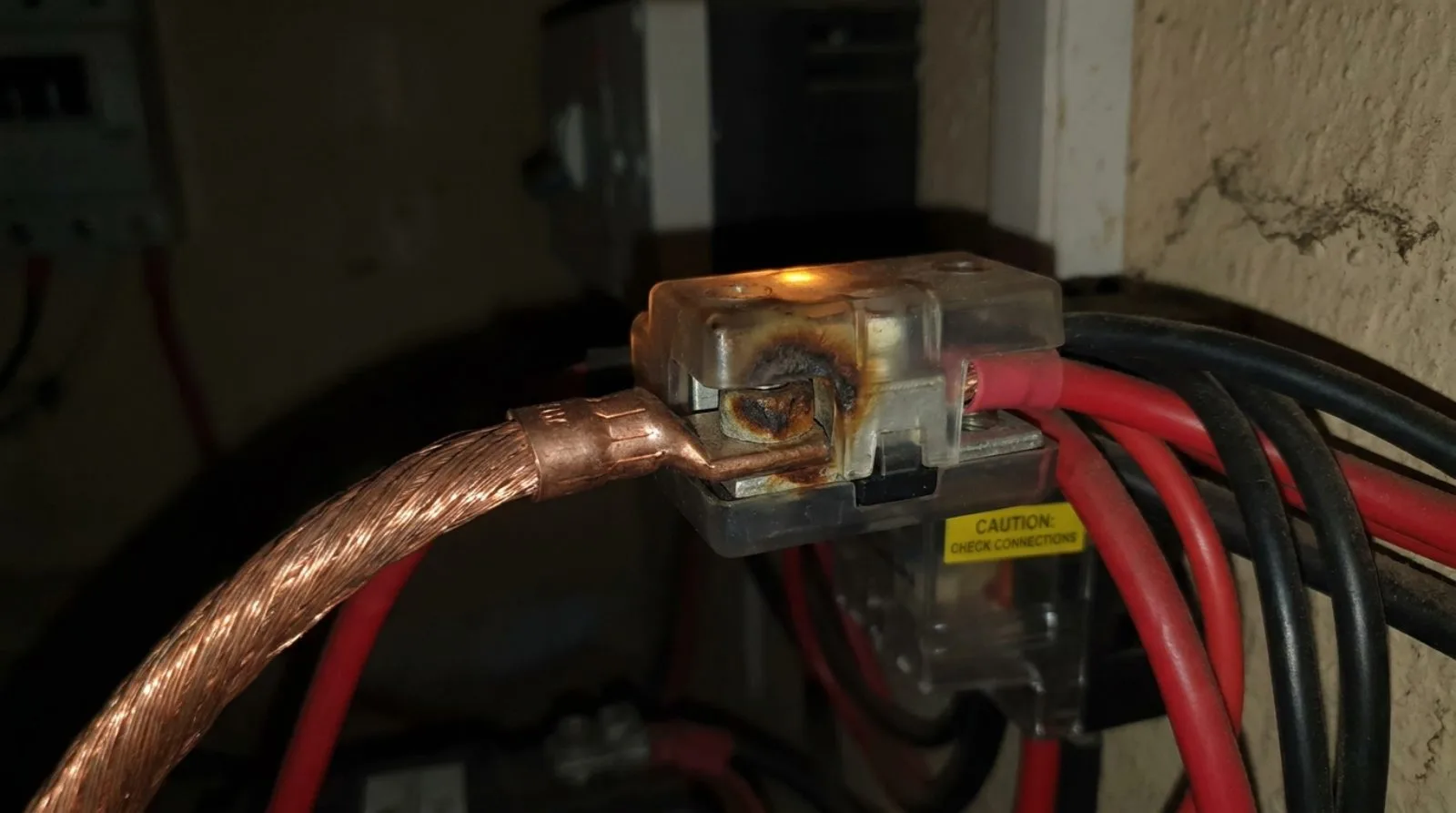
Here is the uncomfortable truth about inverter fires in Nigeria: the inverter is rarely the thing that fails. In most cases the unit is still sitting there intact, while the cable running into it has melted. The fire started at a joint — a terminal that was never tightened properly, a cable too thin for the current it carries, a battery bank wired by someone in a hurry.
That distinction matters, because it changes what you should be looking for. Most buyers compare wattage and price. Almost nobody asks how many places the system can fail.
The 2am problem
NEPA takes light. The inverter switches over. Nobody is awake to notice the smell of hot plastic coming from the corner where the batteries sit.
What actually causes inverter fires
Nearly every case traces back to one of six things. None are exotic, and all of them are checkable before you hand over money.
1. Loose or undersized cable. This is the big one. A connection that is not properly tightened creates resistance. Resistance creates heat. Over weeks that heat degrades the insulation until the cable shorts. Cable too thin for the current does the same along its whole length — and thicker cable costs more, which is exactly why it gets substituted on cheap installations.
2. No proper fusing or breaker. A battery bank can deliver enormous current into a short circuit, far beyond what household wiring is built for. Without correctly rated protection between battery and inverter, nothing interrupts that current before something catches.
3. Mixed or mismatched batteries. Adding a new battery to an old bank, or mixing brands and capacities, causes stronger cells to push current into weaker ones. They heat unevenly, age faster, and eventually one fails while the rest keep pushing.
4. Modified sine wave output. Cheaper units do not produce a clean waveform. Fridges, pumps, fans and anything with a motor run hotter on modified sine wave. The appliance usually dies first, but a motor running hot on bad power is a risk in its own right.
5. No ventilation. Inverters and batteries generate heat under load. Boxed into a cupboard with no airflow, that heat has nowhere to go — and heat turns a small fault into a large one.
6. Running past the rating. A 1,000W inverter asked to carry 1,400W will not always trip. Some units simply run hot and keep going until something gives. If your normal load sits close to the rating, you have no margin for the surge when a fridge compressor kicks in.
The pattern: every joint is a failure point
Look at that list again and a pattern appears. Almost all of it happens at the connections — battery to inverter, battery to battery, inverter to your house. A traditional setup has a lot of those, and each one was made by hand, on site, often in poor light and under time pressure.
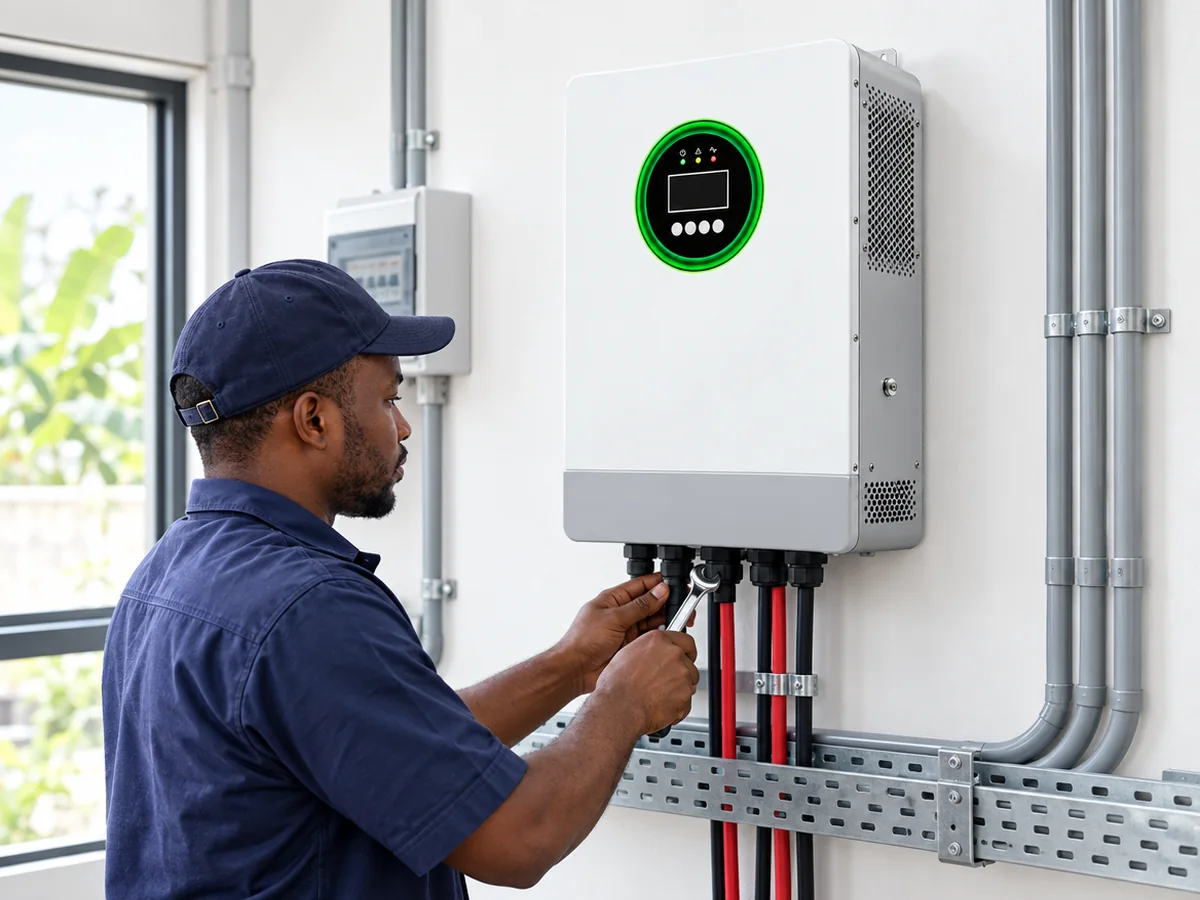
Fewer hand-made joints means fewer places for heat to build.
What to check before you buy
Whatever brand you end up with, these are the questions worth asking. A seller who cannot answer them clearly is telling you something.
- Is the output pure sine wave? Not "simulated", not "modified". Pure sine wave is what your fridge, pump and TV are designed for.
- Does it have overload and short-circuit protection? The unit should shut itself down rather than push through a fault.
- Is there a Battery Management System (BMS)? A BMS monitors cell voltage and temperature and cuts off before things get dangerous. On lithium systems this is not optional.
- What battery chemistry? LiFePO₄ (lithium iron phosphate) is significantly more thermally stable than the lithium-ion in laptops and phones, and does not need the acid ventilation that lead-acid banks do.
- What is the real continuous rating? Not the peak figure on the box. Compare your actual load against continuous output, and leave headroom for motor surges.
- Is it genuine? Ask for the manufacturer datasheet and check the model number matches. Counterfeit units are where protection circuits quietly go missing.
Why fewer connections matters
This is the argument for an all-in-one unit, and it is worth being precise about it. An all-in-one does not make electricity safe. What it does is remove a whole category of risk: the connections between battery and inverter are made and tested in the factory, not assembled on your corridor floor.
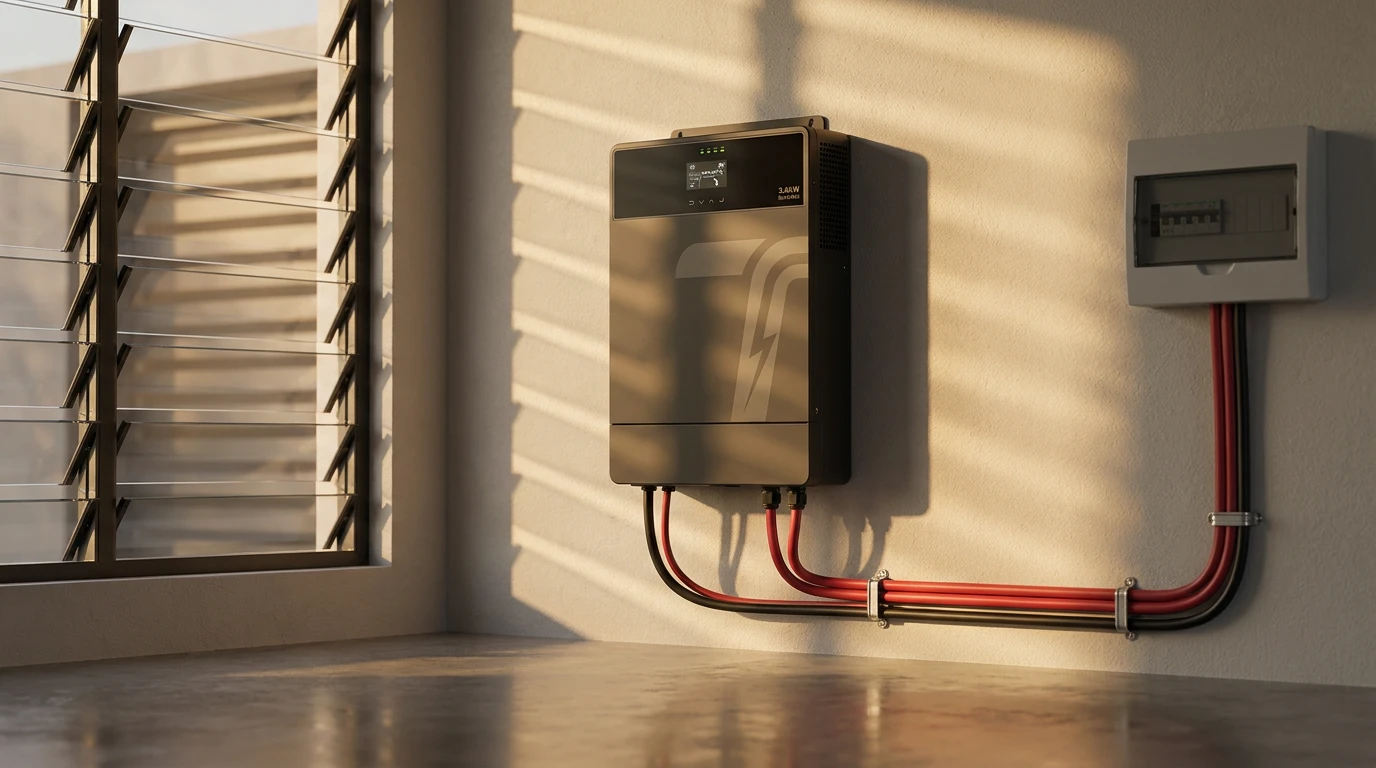
The TURSAN JC-YT-5K is built this way — a 5kW pure sine wave inverter, a 5,222.8Wh BYD LiFePO₄ battery and MPPT solar input in one movable cabinet. There is no battery-to-inverter cabling for anyone to get wrong, because there is no separate battery to cable. It carries overload and short-circuit protection, over-voltage and over-discharge cutoffs, and thermal protection on both charge and discharge.
One honest caveat. "All-in-one" refers to the inverter and battery, not to your house. The unit weighs 61kg and delivers up to 5,600W, and connecting it to your home circuits — through a changeover switch, so it cannot feed back into the grid — is work for a qualified electrician. Anything you plug directly into its sockets, you can plug in yourself. Anything involving your distribution board, you should not. Getting that step wrong reintroduces exactly the risk this article is about.
A checklist you can use tonight
None of this requires buying anything. If you already have an inverter, go and look at it.
- Put a hand near the cable terminals after an hour on load. Warm is normal. Hot is not.
- Look for discolouring or browning around terminals — that is heat that has already happened.
- Check there is a fuse or breaker between your battery and inverter, and that it is rated correctly.
- Make sure nothing is stacked on or around the unit, and that air can move past it.
- Add up what you actually run at once and compare it to the continuous rating.
- If your batteries are different ages, brands or capacities, get that looked at.
- Keep a working smoke alarm in the room where the system lives.
The bottom line
Inverter fires are almost always installation failures, not product failures. That is good news, because installation quality is something you can inspect and ask about before you commit. Buy a unit with real protection circuits and stable chemistry, reduce the number of hand-made joints in the system, and use a qualified electrician for anything touching your house wiring.
If you want a second opinion on your existing setup, send us a photo of your installation on WhatsApp and we will tell you honestly what we would change — whether or not you buy from us.
Frequently Asked Questions
What usually causes inverter fires?
In most cases it is not the inverter but the wiring: loose or undersized cable, missing fuses or breakers, or a badly wired battery bank.
Can I mix old and new batteries?
It is not recommended. Mixing batteries makes stronger cells push current into weaker ones, so they heat unevenly and age faster.
Why does pure sine wave matter for safety?
Fridges, pumps and fans run hotter on modified sine wave power. Pure sine wave output is safer for motors and sensitive electronics.
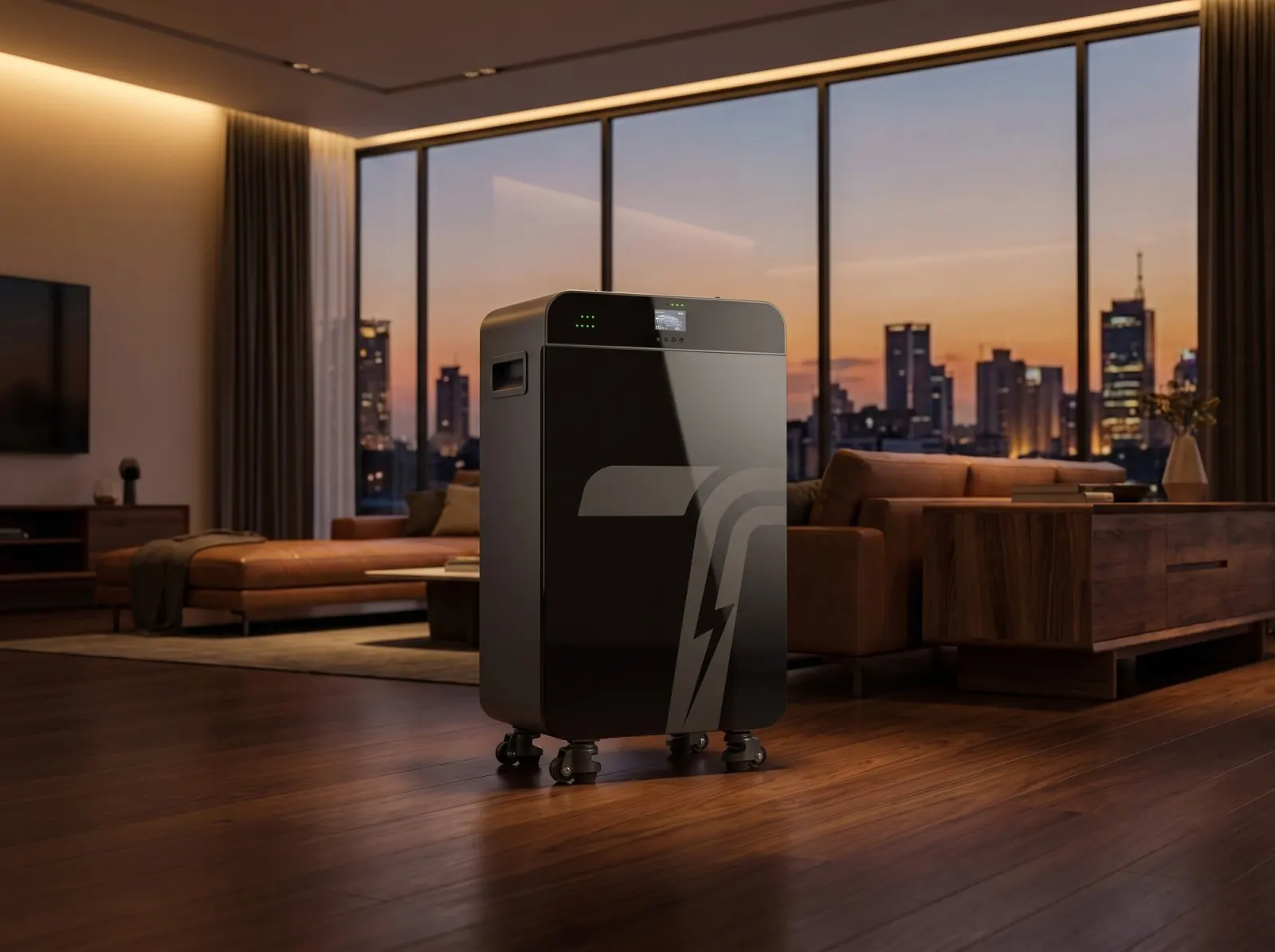
TURSAN JC-YT-5K
5kW pure sine wave inverter, 5,222.8Wh BYD LiFePO₄ battery and MPPT solar in one sealed cabinet — no battery-to-inverter wiring to get wrong.