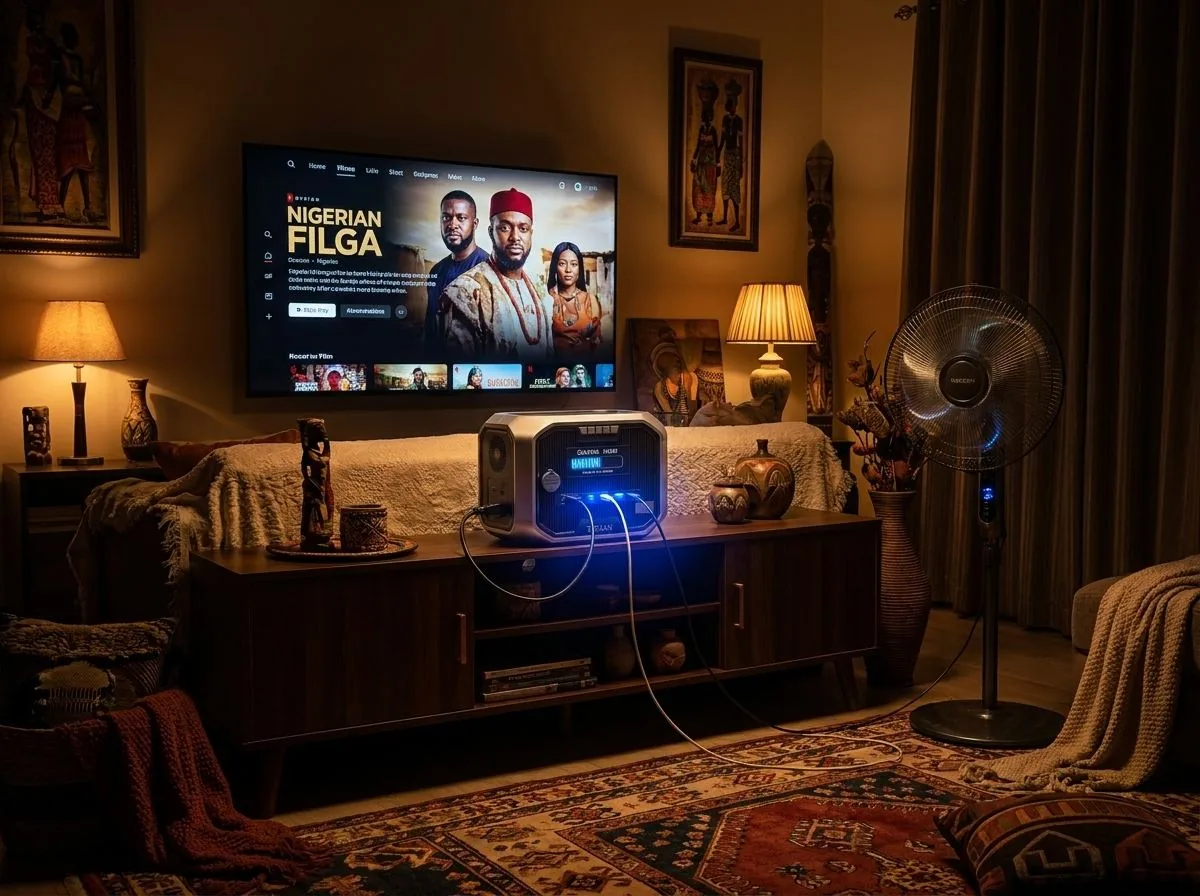
If you run a business in Lagos, you already know the drill: NEPA takes the light, and your income goes with it. Whether it's a salon in Surulere, a POS stand in Ikeja, or a home office in Lekki — when the power goes, so does your productivity, your clients' patience, and your revenue.
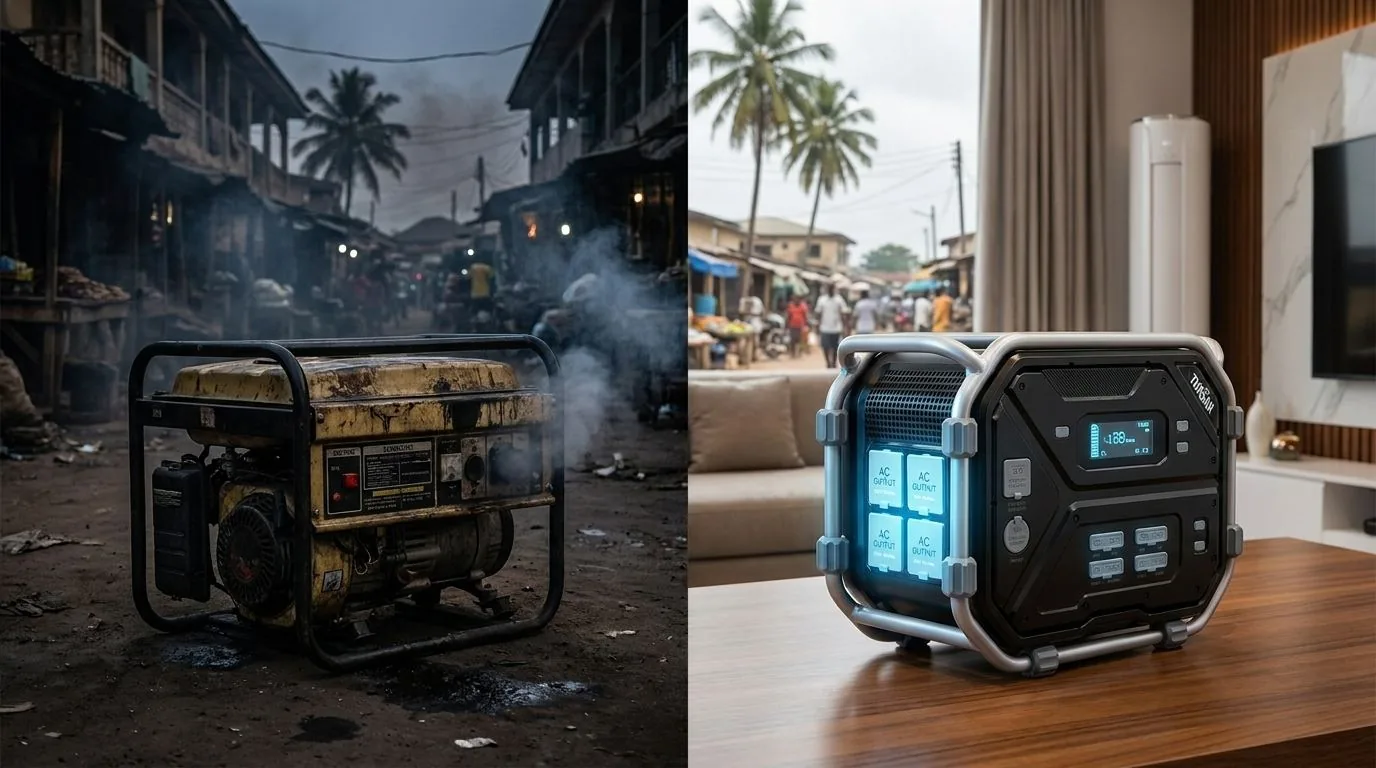
For decades, the petrol generator has been the default answer. But in 2026, there's a quieter, cleaner, and cheaper alternative: the portable power station. Let's break down both options with real Nigerian numbers — not theory.
🚨 The Problem Business Owners Face
The average Lagos business loses 8-12 hours of power per week. That's 40+ hours a month of potential downtime. For a freelancer billing ₦15,000/hour or a salon charging ₦5,000/service, even one outage can cost tens of thousands of naira in lost revenue.
The True Cost of Running a Generator
Most business owners only think about the purchase price. But the real cost is what comes after:
- Fuel: A 3.5kVA generator burns 1-1.5 litres/hour. At ₦700/litre, that's ₦700-1,050 per hour of operation. Run it 4 hours/day and you're spending ₦84,000-126,000/month on fuel alone.
- Oil changes: Every 50-100 hours. That's every 2-3 weeks for daily use. Cost: ₦3,000-5,000 each time.
- Servicing: Spark plugs, air filters, carburettor cleaning. Budget ₦15,000-25,000 every quarter.
- Repairs: Generators break. Coils burn out. AVRs fail. Budget ₦30,000-80,000/year for unexpected repairs.
- Noise complaints: Not a naira cost, but a real business cost. Clients leave noisy environments. Neighbours complain. Landlords add conditions.
Total annual cost of generator ownership: ₦1,200,000 - ₦1,800,000 (beyond the purchase price).
What a Portable Power Station Costs
Let's take the TURSAN YC 1100 as our baseline — a mid-range unit that handles most small business needs:
- Purchase price: ₦539,999 (one-time)
- Fuel cost: ₦0. Charges from the wall or solar.
- Maintenance: ₦0. No oil, no spark plugs, no moving parts.
- Electricity to charge: Approximately ₦200-400 per full charge from the grid.
- Noise: Zero. Completely silent operation.
⚡ The NIXDIN Advantage
A TURSAN power station pays for itself within 4-6 months compared to generator fuel and maintenance costs. After that, every month is pure savings — up to ₦100,000/month back in your pocket.
Head-to-Head Comparison
| Factor | Petrol Generator | TURSAN Power Station |
|---|---|---|
| Purchase Price | ₦80,000 - ₦250,000 | ₦439,999 - ₦1,350,000 |
| Monthly Running Cost | ₦100,000 - ₦150,000 | ₦2,000 - ₦5,000 |
| 3-Year Total Cost | ₦3,800,000 - ₦5,600,000 | ₦445,000 - ₦1,495,000 |
| Noise Level | 65-80 dB (conversation-level) | 0 dB (silent) |
| Indoor Use | Never (CO poisoning risk) | Yes, completely safe |
| Maintenance | Every 2-4 weeks | None required |
| Lifespan | 2-5 years | 10+ years (4,000+ cycles) |
| Solar Compatible | No | Yes (MPPT input) |
Example Business Scenarios
Scenario 1: Hair Salon in Yaba
A salon running clippers (50W), a dryer (1,200W), lights (100W), and a phone charger. The generator runs 5 hours daily, consuming ₦3,500 in fuel. Monthly fuel bill: ₦105,000.
With a TURSAN YC 1200 (₦769,999), the salon charges overnight from the grid for ₦300. Monthly power cost: ₦9,000. The station pays for itself in under 9 months.
Scenario 2: Remote Worker in Lekki
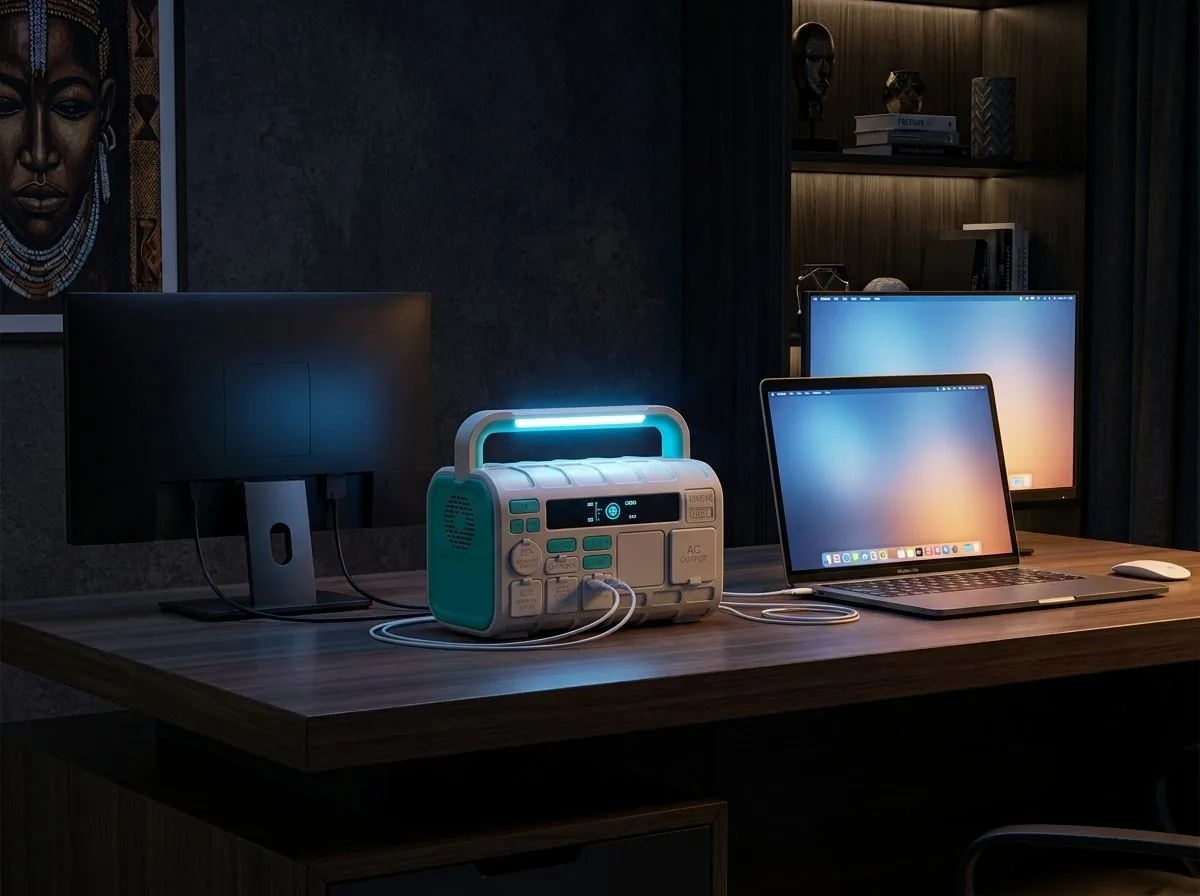
A freelancer needs their laptop (65W), monitor (30W), Wi-Fi router (12W), and desk lamp (10W) — total 117W. A generator is absurd overkill for this. A TURSAN YC 600S (₦439,999) runs this setup for 5+ hours on a single charge, silently, right on the desk.
Scenario 3: POS Agent / Small Shop in Ikeja
A POS terminal (15W), LED lighting (40W), small fan (45W), and phone charging. Total: 100W. The TURSAN YC 600S keeps this running for 6+ hours — more than enough to cover a typical NEPA outage.
But What About Heavy Appliances?
Fair question. If you need to run industrial equipment, a deep freezer, or heavy AC units, a generator or inverter system may still be necessary. But for 90% of small business power needs — laptops, lights, fans, POS machines, phone charging, small appliances — a portable power station is not just sufficient, it's superior.
And with the TURSAN YC 2400 pushing 2,400W of pure sine wave output, even a small fridge, TV, and multiple fans run simultaneously.
The Verdict
"A generator is the expensive habit. A power station is the one-time investment that keeps paying you back."
If you're a small business owner or remote worker in Lagos, the numbers don't lie. A portable power station saves you money from month one, runs silently, requires zero maintenance, works indoors, and lasts 10+ years.
The only question is which size fits your setup.
Frequently Asked Questions
How much does running a generator really cost?
Beyond the purchase price, fuel, oil, servicing and repairs add up to about ₦1.2–1.8 million a year for a 3.5kVA generator running 4 hours a day, by this guide’s estimate.
What does a power station cost to run?
Its fuel and maintenance cost is zero. You only pay for the electricity to charge it from the wall, about ₦200–400 per full charge, or nothing on solar.
Which model is a good baseline for a small business?
The TURSAN YC 1100 is a mid-range unit that handles most small business needs.
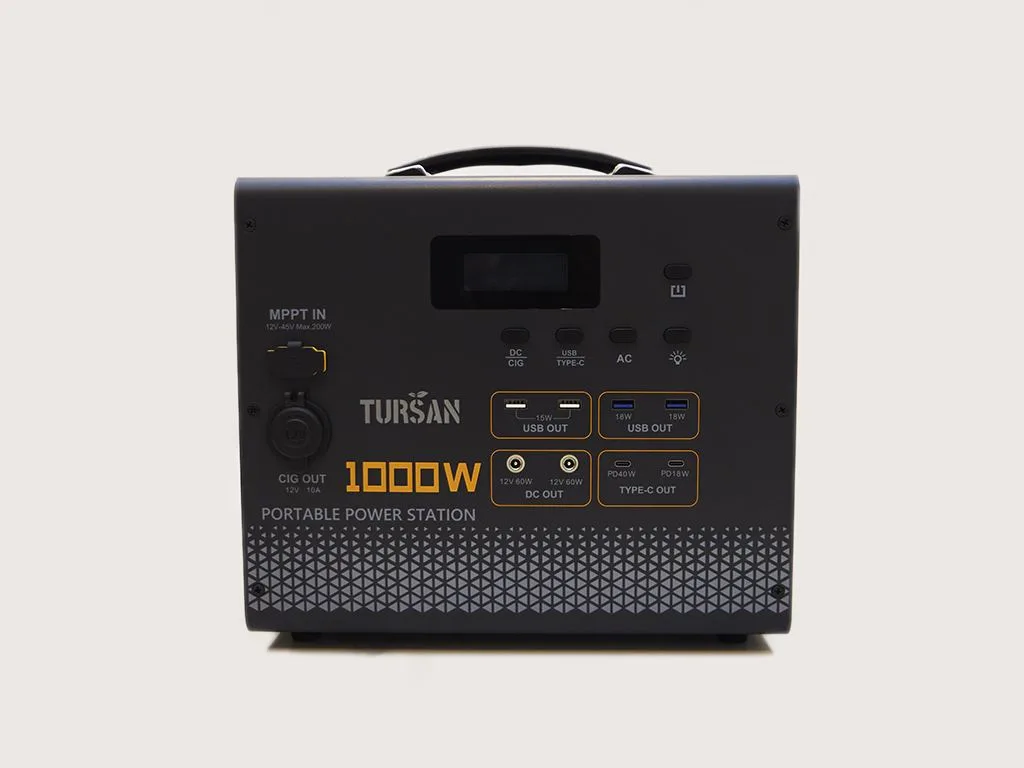
TURSAN YC1100 Portable Power Station
The perfect mid-range unit for salons, shops, and home offices. 1000W output, BYD LiFePO4 battery, 4,000+ charge cycles, MPPT solar input. 2-year warranty included.