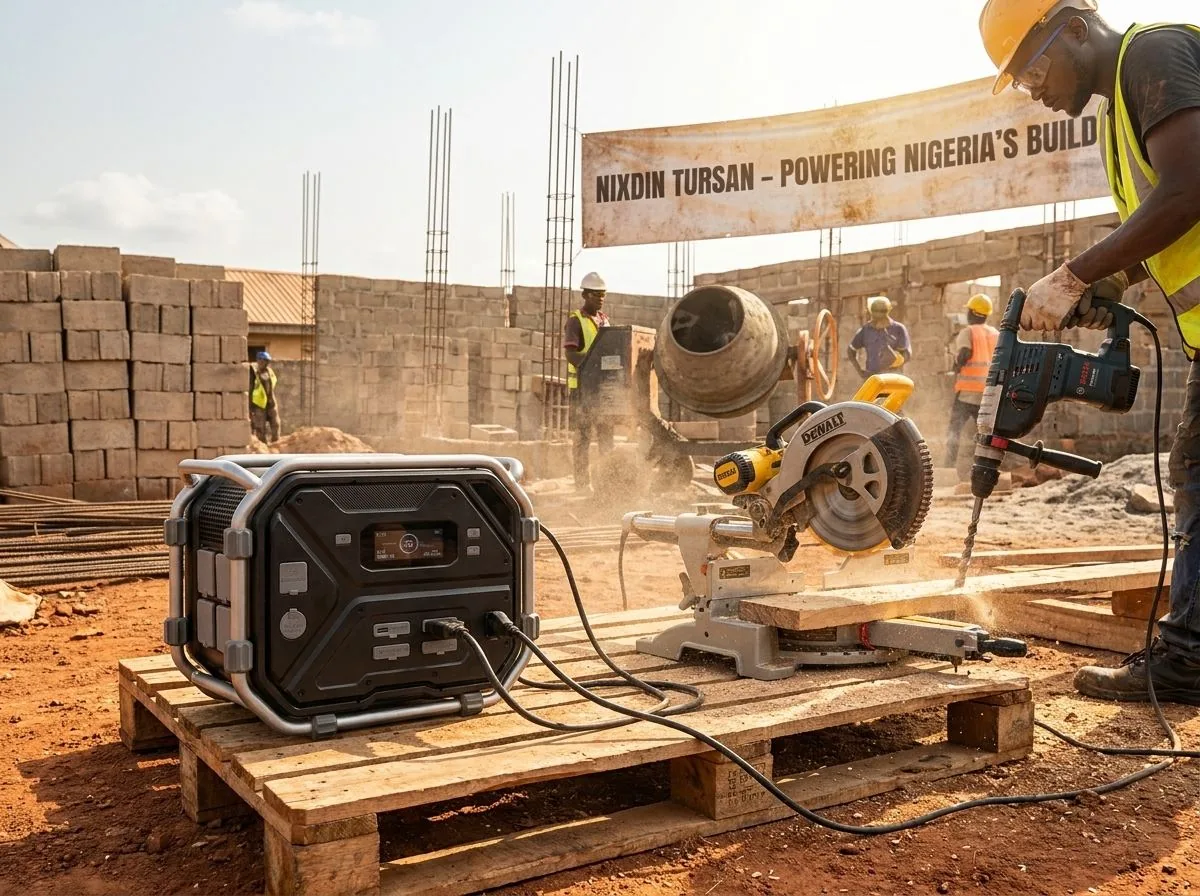
Your portable power station is only as useful as its ability to recharge. And in Nigeria, where the grid is unreliable, fuel is expensive, and sunlight is abundant, the question of how you charge your unit matters just as much as what you charge with it.
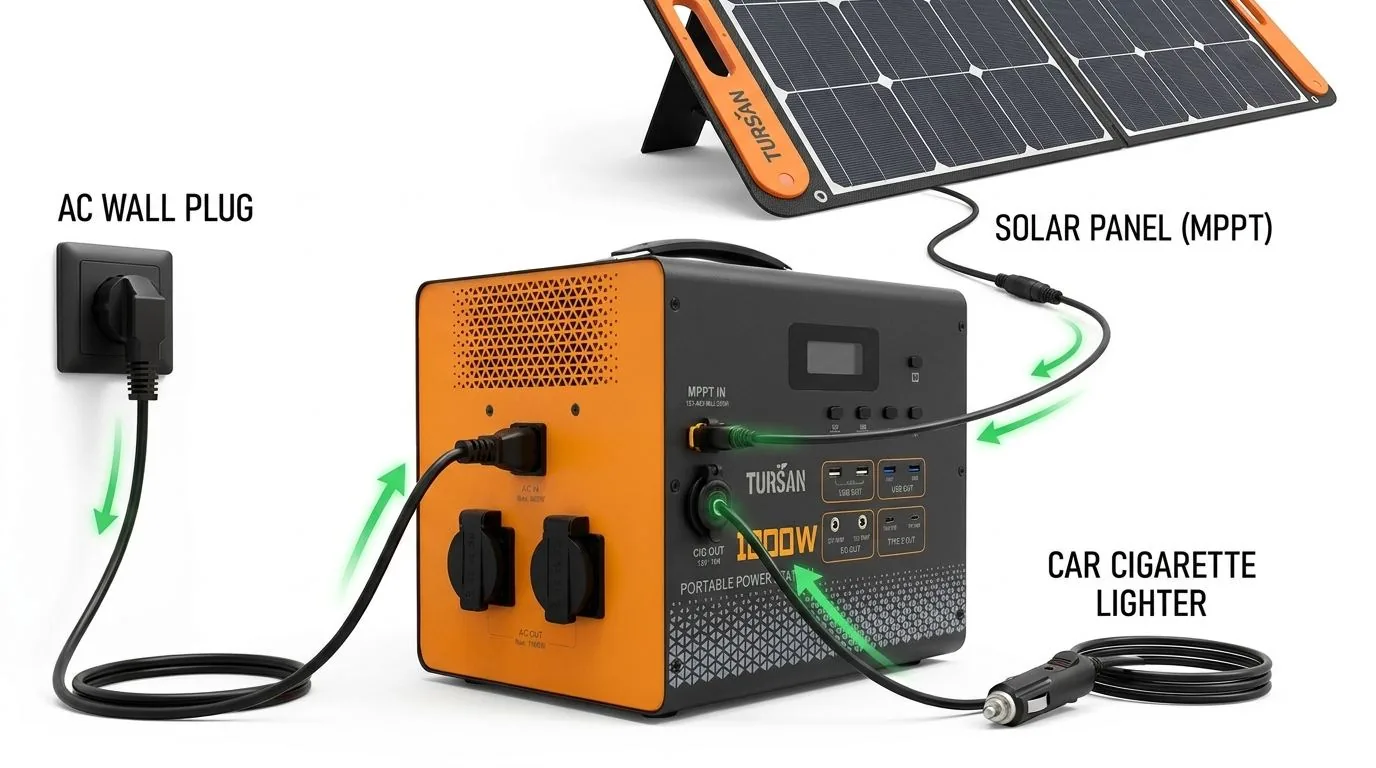
TURSAN power stations support three charging methods: AC wall charging, solar panel charging, and 12V car charging. Each has its strengths, weaknesses, and specific situations where it shines. Let's break down all three with Nigerian realities in mind.
🚨 The Charging Dilemma
Many Nigerian power station owners rely solely on AC charging — then get caught with a dead unit during extended blackouts because they have no backup charging method. Understanding all your options before you need them is the difference between staying powered and going dark.
Method 1: AC Wall Charging
This is the most common and fastest way to charge your power station. You plug the included AC adapter into a wall outlet, connect it to the power station, and wait.
How It Works
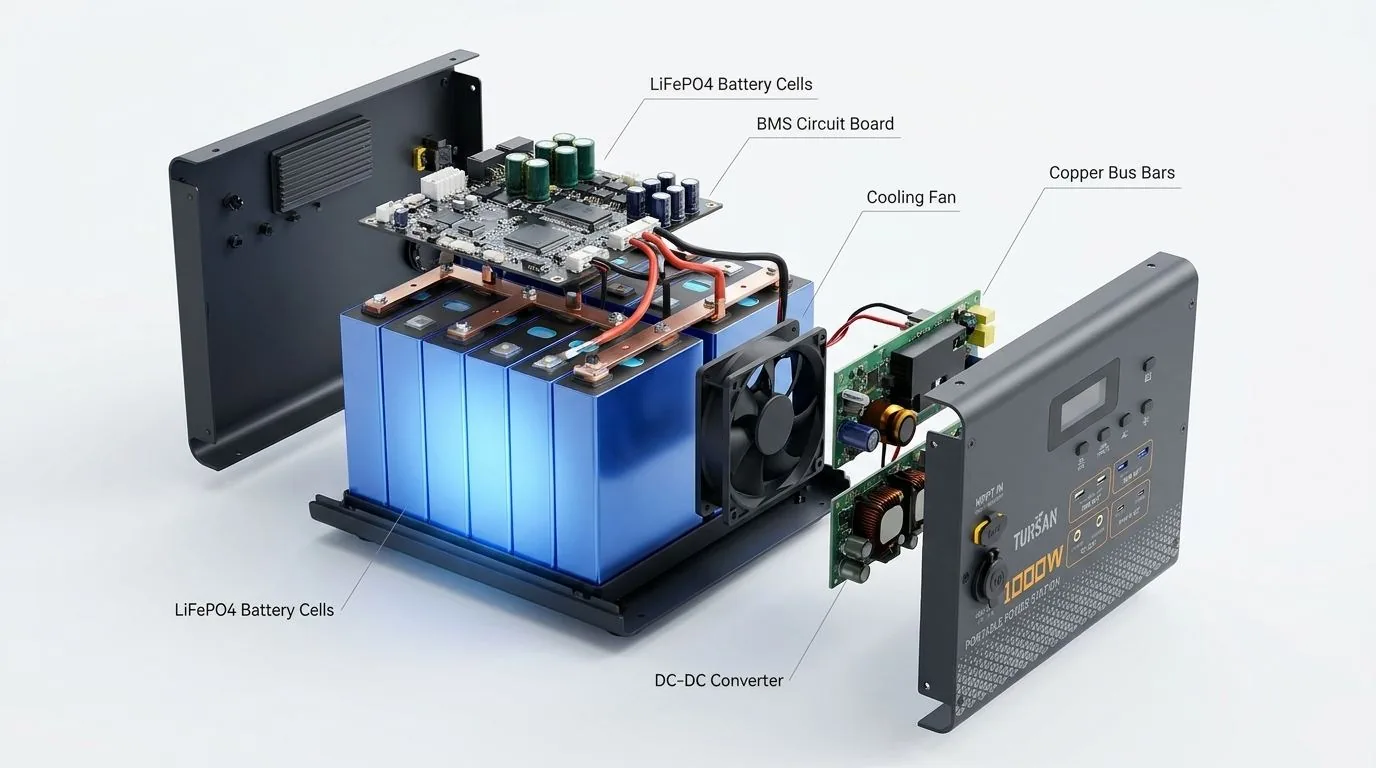
The AC adapter converts your wall's alternating current (AC) to the direct current (DC) that the battery needs. TURSAN units include smart chargers that regulate voltage and current to protect the LiFePO4 cells. The charger communicates with the Battery Management System (BMS) to ensure safe, efficient charging.
Charging Speed
| Model | Battery Capacity | AC Charge Time (0-100%) |
|---|---|---|
| YC600S | 655Wh | ~1.7 hours |
| YC 1100 | 1,222.8Wh | ~1.5 hours |
| YC 1200 | 1,310Wh | ~1.5 hours |
| YC 2400 | 2,621Wh | ~2.5 hours |
Pros
- Fastest charging method — typically 2-3x faster than solar or car charging
- Most convenient — just plug in and forget
- Consistent charging rate — doesn't depend on weather or driving
- Included in the box — no additional purchase needed
Cons
- Requires grid power — useless during extended blackouts (the very time you need it most)
- Nigerian voltage instability — voltage swings between 160V-250V can stress the charger. In extreme cases below 150V, charging may fail entirely or proceed very slowly
- Electricity cost — while cheap (₦200-500 per full charge depending on your tariff band), it's still a recurring cost
⚡ Pro Tip for Nigerian AC Charging
If your area has frequent voltage drops, invest in a voltage stabiliser (₦8,000-15,000) between your wall socket and the power station charger. This protects the charger from damage and ensures consistent charging speed. Also, charge overnight when you're on the grid — electricity rates are the same, but you'll have a full battery ready for the next day's outage.
Method 2: Solar Panel Charging
This is where things get exciting for Nigerian users. Nigeria sits in one of the best solar belts in the world, receiving 5-7 hours of peak sunlight daily across most of the country. Solar charging turns that free energy into stored power in your station.
How It Works
You connect a compatible solar panel to the power station's DC input port. TURSAN units feature built-in MPPT (Maximum Power Point Tracking) charge controllers, which optimize the power drawn from solar panels — extracting up to 30% more energy than basic PWM controllers found in cheaper stations.
The MPPT controller automatically adjusts voltage and current to match whatever your panel is producing, whether it's full noon sun or partly cloudy conditions.
Solar Charging Speed
Solar charging speed depends on three factors: panel wattage, sunlight intensity, and angle. Here's a realistic expectation for Nigerian conditions:
| Panel Size | Realistic Output (Nigeria) | Time to Charge YC1100 |
|---|---|---|
| 100W panel | 70-85W actual | ~14-16 hours (2 days) |
| 200W panel | 140-170W actual | ~7-8 hours (1 day) |
| 2x 200W panels | 280-340W actual | ~3.5-4 hours |
Important: Solar panels never produce their rated wattage in real conditions. A "200W" panel produces 200W only under laboratory test conditions (25°C, perfect angle, zero clouds). In Nigeria's heat (panel surface temperatures often exceed 50°C), expect 70-85% of rated output.
Pros
- Completely free energy — after the panel purchase, your charging cost is ₦0 forever
- Grid-independent — works during blackouts, making it the perfect backup charging method
- Nigeria is ideal for solar — 5-7 hours of usable sun daily, 300+ sunny days per year in most regions
- Silent and zero-emission — no fumes, no noise, no fuel runs
- Portable — foldable panels can go anywhere: rooftop, balcony, even on road trips
Cons
- Slower than AC — unless you invest in high-wattage panels
- Weather-dependent — rainy season (April-October) reduces output significantly on cloudy days
- Requires additional purchase — quality solar panels cost ₦50,000-200,000 depending on wattage
- Space requirements — panels need direct sunlight, which can be challenging in apartments or dense urban areas
- Theft risk — panels left outside can attract unwanted attention
Solar Tips for Nigerian Users
- Face panels south (Nigeria is in the Northern Hemisphere) at a 10-15° tilt angle for optimal year-round performance
- Clean panels regularly — Harmattan dust can reduce output by 20-30%. A quick wipe with a damp cloth weekly makes a real difference
- Start charging early — the best solar hours are 9 AM to 3 PM. Don't wait until afternoon
- Consider foldable panels — they can be brought inside at night, reducing theft risk and weather exposure
- Pair with AC for the best of both worlds — charge via solar during the day, top up from the wall at night if grid power is available
Method 3: Car Charging (12V DC)
Every TURSAN power station includes a 12V car charging cable. You plug it into your car's cigarette lighter or 12V accessory port, and the car's alternator charges your power station while you drive.
How It Works
Your car's alternator produces 12-14V DC power while the engine is running. The car charging cable feeds this into the power station's DC input. The unit's internal charge controller manages the incoming power safely.
Charging Speed
Car charging is the slowest of the three methods. Most car 12V ports are fused at 10-15A, limiting input to approximately 120-180W. This means:
- YC600S: ~4-5 hours of driving
- YC1100: ~7-9 hours of driving
- YC1200: ~8-10 hours of driving
- YC2400: ~15-18 hours of driving
Pros
- Always available — if you have a car and fuel, you can charge
- Multi-task charging — charge while commuting, no extra time needed
- Emergency lifeline — when both grid and sun fail, your car becomes a charging source
- No additional equipment needed — cable comes included
Cons
- Slowest method — limited by the car's 12V port capacity
- Requires driving — charging with the car parked and idling wastes fuel and is inefficient
- Fuel cost — you're effectively using petrol to charge, though far more efficiently than a generator
- Wear on car battery — extended charging sessions with the engine off can drain your car's starter battery
🚨 Never Do This
Do not charge your power station from your car with the engine turned off. This will drain your car's 12V starter battery, potentially leaving you stranded. Always keep the engine running when using car charging. The alternator produces the power — the car battery just starts the engine.
The Complete Comparison
| Factor | AC Wall | Solar | Car 12V |
|---|---|---|---|
| Speed | Fastest | Medium | Slowest |
| Cost per Charge | ₦200-500 | ₦0 (free) | ₦500-1,500 (fuel) |
| Grid Dependent? | Yes | No | No |
| Weather Dependent? | No | Yes | No |
| Extra Equipment? | None (included) | Solar panel (₦50K-200K) | None (included) |
| Best For | Daily charging when grid is available | Blackout-proof independence | Emergency & travel |
Which Method Should You Use? Our Recommendation
The honest answer: all three. The smartest Nigerian power station owner uses a combination strategy:
- AC as your primary method — fastest and most convenient. Charge overnight whenever grid power is available.
- Solar as your independence method — invest in at least a 200W panel. During extended blackouts or fuel scarcity (remember the fuel queues of 2023?), solar keeps you powered when everyone else goes dark.
- Car as your emergency method — keep the cable in your glove box. If both grid and sun fail, your car becomes your backup.
"In Nigeria, the person with three ways to charge is the person who never runs out of power. AC for convenience, solar for independence, car for emergencies."
A Note on Charging Safety
Regardless of which method you use, follow these universal rules:
- Never use damaged cables or adapters. Frayed wires, bent connectors, or cracked housings are fire hazards.
- Don't charge in enclosed, unventilated spaces. Charging generates heat, and the unit needs airflow.
- Don't charge in extreme heat (above 45°C). If the room feels unbearably hot, move the unit somewhere cooler before plugging in.
- Monitor the first few charges of any new unit. Check for unusual heat, smells, or error codes on the display.
- Use only TURSAN-compatible solar panels. Check voltage and wattage specifications match the unit's MPPT input range.
Frequently Asked Questions
What is the fastest way to charge a power station?
AC wall charging is the fastest, typically two to three times faster than solar or car charging. The YC 1200 charges in about 1.5 hours.
Can unstable NEPA voltage affect charging?
Yes. Voltage swings can stress the charger, and very low voltage may make charging fail or slow down. A voltage stabiliser between the socket and the charger helps.
Should I have more than one way to charge?
Yes. Relying only on wall charging can leave you with a dead unit during long blackouts, so having solar or car charging as a backup keeps you powered.
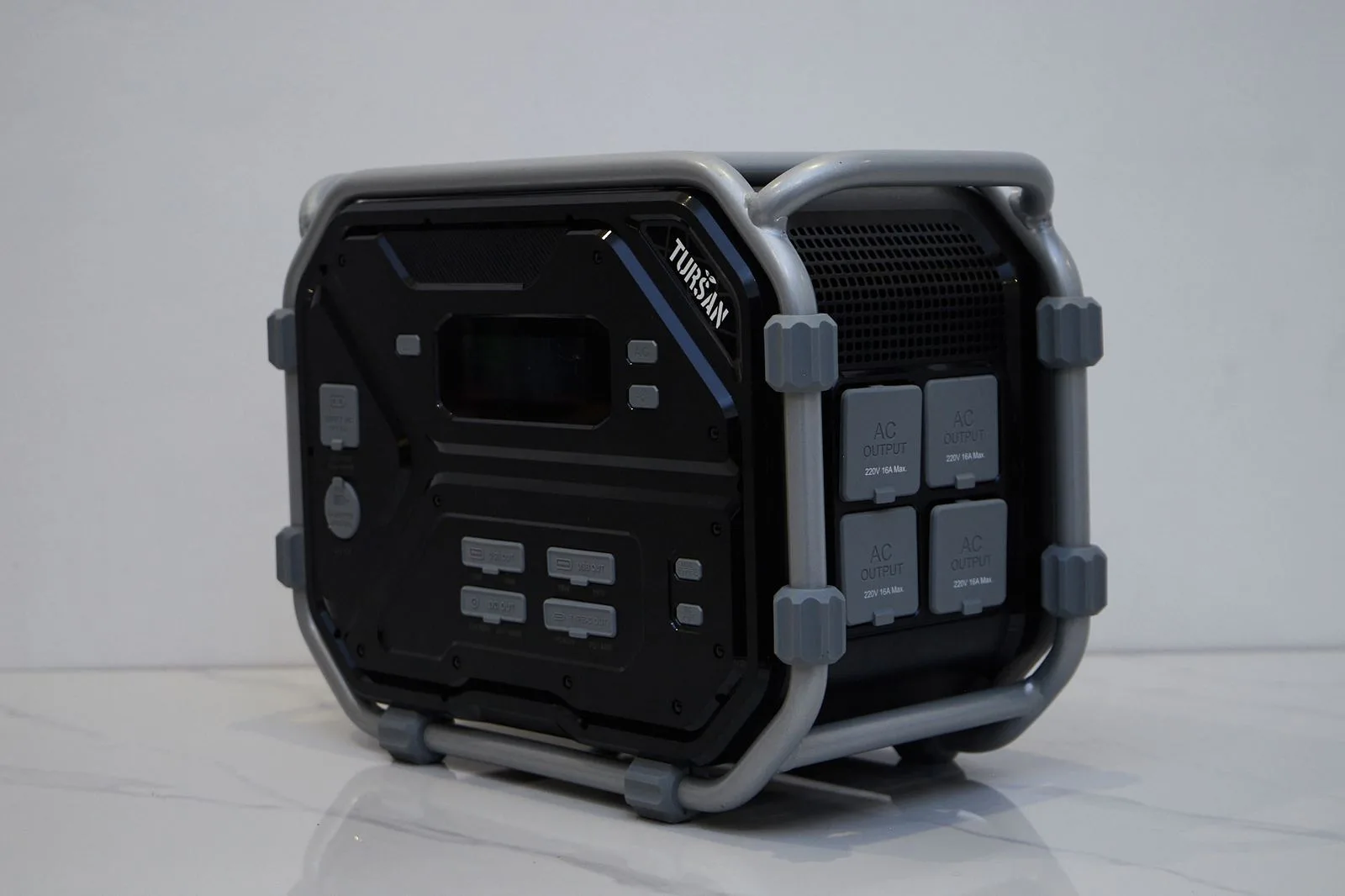
TURSAN YC2400 Portable Power Station
The flagship unit with 2400W output and massive 2,621Wh capacity. Supports AC, solar (MPPT), and car charging. BYD LiFePO4 cells, 4,000+ cycles, pure sine wave output. Power your entire setup — fridge, TV, fans, and more — simultaneously.